


 Help Center



The Mission: To expose abuses of power and betrayals of the public trust by government, business, and other institutions, using the moral force of investigative journalism to spur reform through the sustained spotlighting of wrongdoing.
-
PBID: 0230001100000036
-
1 pessoas curtiram isso
-
167 Publicações
-
2 fotos
-
0 Vídeos
-
Anterior
-
News and Politics

 English
 Arabic
 French
 Spanish
 Deutsch
 Turkish
 Dutch
Dutch
 Italiano
 Russian
 Romaian
 Portuguese (Brazil)
 Greek
Greek
Atualizações Recentes
-
 WWW.PROPUBLICA.ORGThe FDA Often Doesnt Test Generic Drugs for Quality Concerns, So ProPublica DidIts a fundamental tenet of health care in America: Generic drugs are just as safe and effective as brand-name ones. The only difference is the price.The same high quality, strength, purity and stability, the Food and Drug Administration assured the public years ago as factories started to flood the market with their own, cheaper versions of commonly used drugs, from antibiotics to cancer treatments.But the agency stakes that promise on a risky gamble.It doesnt routinely test generics for quality concerns or to see if theyre working as effectively as brand-name medications. Instead, the agency heavily relies on drug companies, often in countries as far away as India and China, to do their own testing and to report any problems.In recent years, independent labs, universities and the Department of Defense have raised alarms about contaminants and other quality failures in a number of generic medications. So have doctors, who in some cases have gone on to create their own ad hoc lists of drugs they trust and those they learned to avoid.Yet the FDA largely dismissed the warnings and has only sporadically tested a sampling of generic drugs, which now account for about 90% of prescriptions in the United States. That means the government cant always say which ones may be compromised or how often that happens. And patients cant make informed choices about which drugmakers to depend on.This ridiculous, small sample of testing that FDA does just cannot stand, said Albinus DSa, a chemist who spent more than 25 years in drug safety at the FDA before retiring in 2023. Its not in the public interest.ProPublica decided to test several generic versions of three of the most widely prescribed drugs in the United States: the antidepressant bupropion XL, the generic for Wellbutrin XL; the heart medicine metoprolol succinate, the generic for Toprol XL; and the cholesterol drug atorvastatin, the generic for Lipitor. A total of 11 samples from readers, ProPublica employees and the independent testing lab Valisure were assessed, representing a cross section of manufacturers from around the world.Some were analyzed for impurities such as lead or whether their dosage levels matched the claims on their labels. Another test scrutinized the speed at which the tablets dissolved a critical indicator of how medication is released in the body and compared the results to the brand-name drugs.While most of the samples passed, the findings showed that one version of bupropion and one version of metoprolol, dispensed at least tens of thousands of times in 2024 alone, had irregularities that experts say could compromise their effectiveness.As part of ProPublicas testing at the Connecticut-based lab Valisure, a scientist dropped samples of generic drugs into a solution to see how quickly they dissolved. Tonje Thielesen for ProPublicaThe tablets dissolved slower than their brand-name counterparts, which could leave patients without the right therapeutic levels for treatment and no way of knowing if their medication might be at fault.Metoprolol is a beta blocker used by about 15 million people for conditions like chest pain, heart failure and high blood pressure. Bupropion is a go-to drug for the treatment of depression, prescribed to about six million people in the U.S. each year.Oregon psychiatrist Dr. James Hancey said receiving incorrect amounts of bupropion throughout the day is a serious quality threat that puts vulnerable patients at risk.One of the great potential dangers here is that people become discouraged and disillusioned, he said when told about ProPublicas findings.Hancey said he worries that patients taking ineffective antidepressants can feel hopeless, increasing suicide risk. Sort of like, I must really be messed up. Ill never get any better, he said. You can only lose so much hope.Irregular levels of metoprolol can also pose a danger, especially for people with congestive heart failure or a history of heart attacks, said Dr. Art Kellermann, a longtime member of the National Academy of Medicine and former senior vice president for health sciences at Virginia Commonwealth University.You may never get to the level your body needs to be safe, he said.A scientist preps samples of the antidepressant bupropion XL for ProPublicas testing. Tonje Thielesen for ProPublicaDozens of companies received approval from the FDA over the years to sell metoprolol and bupropion in the U.S. Yet from 2018 to 2024, the agency reported running only 2 tests on metoprolol and 7 on bupropion through its quality surveillance program in each case, by pulling a sample from a single drugmaker. In many of those years, the drugs werent tested at all, FDA records show. Those that were assessed received passing results.The FDA did not respond to questions about why the agency didnt do more testing and how it can know that generics are safe without a more robust program. On its website, the FDA said it has relied on a more targeted, risk-based approach to testing since 2018, choosing samples of drugs that have safety, effectiveness or quality concerns. The agency publicly reports the results on its website and notes that a majority of the tested drugs meet its standards.ProPublica, however, found the agency for years failed to routinely test not only the generics that have worried outside experts but also drugs coming from factories that amassed so many serious quality and safety violations they were ultimately banned from the U.S. market.In 2023, the FDA barred two Intas Pharmaceuticals factories in India from shipping drugs to the U.S., in part because workers had manipulated drug-testing records to cover up bad results, government records show. An egregious pattern, regulators wrote in a letter to the company.The agency simultaneously excluded the companys bupropion from that ban, a practice used by the FDA to avoid drug shortages, and has only reported testing the medication once since then. It passed.ProPublicas testing, however, found the factorys bupropion dissolved more slowly than the brand-name drug as well as versions of the medication made by other generic manufacturers.Intas, whose U.S. subsidiary is Accord Healthcare, said in a statement that its bupropion is safe, effective and equivalent to the brand-name medication, and that the company has made improvements since the FDAs inspections, including bringing in third-party experts focused on quality and data integrity. The company added it is no longer manufacturing bupropion for the U.S.In recent years, the FDAs own records show the agency has fielded thousands of complaints about generic versions of both bupropion and metoprolol. Some reports described seizures, cardiac arrest, nausea and other health problems. Others said the pills just didnt control patients symptoms.Kellermann and others said too many doctors shrug off those concerns, attributing them to bad luck or a patients underlying conditions without considering that the medication itself could be the problem.Before we blame God or biology, what are we doing with the best intentions that might be hurting this patient? he said. If we dont entertain the possibility that the patient is right, then we might overlook the true cause of their problem. Thats why testing generic drugs to verify their quality and safety is so important.Though generic drugs have poured in from overseas factories, the FDA opted to conduct only sporadic testing for quality. Tonje Thielesen for ProPublicaAfraid of What It Could FindDespite its reputation as one of the worlds toughest drug regulators, the FDA takes a decidedly hands-off approach to testing. Its position hasnt wavered even though the drug supply chain is sprawling, with manufacturers scattered around the world. India produces about half of all generics used in the United States, and crucial ingredients are made in China.When manufacturers from those countries send drugs to the European Union, they are required to use labs on EU soil to test every batch before releasing them to the public. There is no such requirement in the U.S.In interviews with ProPublica, former FDA officials and others who have studied the safety of generics said the agency should have done more years ago to probe the drug supply.Though billions of prescriptions for generic pills, tablets and vials of injectable medication are filled every year, the FDA reported conducting fewer than 650 tests under its quality surveillance program since 2018. That number includes many generic drugs, as well as some brand-name prescription drugs, over-the-counter medications like Childrens Tylenol, and various drug ingredients.About 94% of those tests produced passing results, FDA data shows. In 2024, the most recent year with data, the agency reported the results of just over 50 tests.The total does not include tests on hand sanitizers and supplements or any other quality testing that is not publicly reported. The FDA sometimes commissions studies about drugs, which are also not reflected in the tally.DSa said the FDAs efforts arent nearly enough.Valisure tested drugs for impurities, such as lead and arsenic. Tonje Thielesen for ProPublicaAs deputy director of the agencys India office in 2009, he said he worried that inspections alone couldnt guarantee Americans were receiving quality medication. His team was scouring facilities in every corner of the country and regularly reporting distressing results: factory after factory with no testing procedures to monitor the strength, quality or purity of drugs. Some factories werent being inspected at all.In 2024, the FDA inspected a third of Indias nearly 600 manufacturing sites, agency data shows.Regular testing would be an objective measure of quality, DSa said, noting that inspections only examine manufacturing practices at a single point in time.Other agency insiders have also been concerned. One former official at the FDAs Center for Drug Evaluation and Research still remembers a phone call almost 20 years ago from a sobbing woman in Texas who said her husband had switched to a generic version of bupropion that she said wasnt effective. He killed himself.That used to keep me up at night, said the former official, who did not want to be identified because they still have ties to the agency. The FDA needed more training at its testing labs, among other improvements, the official said, but changes were slow.In an interview, Janet Woodcock, the longtime head of drug safety at the FDA, said the agency didnt have the resources to do more testing and that she wasnt overly concerned about widespread lapses in quality.A huge, huge majority of drugs on the U.S. market are totally fine, said Woodcock, who retired from the agency early last year.Woodcock did not respond to a question about how she knows that drugs are safe if the FDA hasnt regularly tested them. Instead, she said, the best way to ensure quality is through training and improved manufacturing.I dont believe random testing is an appropriate method for maintaining quality of the drug supply, she said.Some doctors and others said they believe the FDA decided against routine testing because it could undermine the publics confidence in generics and raise questions about the agencys oversight of the industry.The FDA doesnt want to do the testing because it is afraid of what it could find, said pharmacologist Joe Graedon, who for years has advocated for drug safety reforms on his website The Peoples Pharmacy.The FDA has even resisted when groups outside the agency offered to help.At Valisure, tablets were crushed in advance of testing for heavy metals. Tonje Thielesen for ProPublicaWe Want to Find the Really, Really Horrible OnesNearly every morning before dawn, a truck stocked with more than $2 million in prescription drugs arrives at the University of Kentuckys hospital. Without fail, chemist Robert Lodders team of pharmacy technicians is there to greet it.While other hospital employees ready the sterile injectables for use, Lodders technicians siphon off samples and whisk them off to a small lab tucked inside the pharmacy. There, they put the samples on a machine called a spectrophotometer to get a picture of each drugs chemical composition.If the medication is made properly, Lodder and his team would see a similar image for every batch. Too often, something doesnt look right.Lodder has screened hundreds of thousands of samples since 2020, representing about 350 different medications. About 10% of those drugs have failed the initial assessment and were removed from the hospitals supply for further study. Some were cleared after Lodder looked at them a second time, but he was so concerned about 20 different drugs that he reported the problem to the FDA and urged the hospital to change suppliers if it could.Lodder first became interested in drug quality when he was a graduate student at Indiana University in the 1980s. At the time, people were dying after someone tampered with over-the-counter pain relievers to lace them with cyanide, prompting Lodder to study the makeup of similar drugs. When he took the job at the University of Kentucky in 1988, he urged his bosses to set up a lab to screen medications.Lodder knew the FDA assessed and nearly always passed samples from only a small number of drugs. For sterile injectable medication, which can be particularly dangerous if contaminated, Lodder wanted to look at every vial that came through the hospitals doors.We want to find the really, really horrible ones, he said. Theres almost always a few that you would not want to put out there.Read MoreLook Up Where Your Generic Prescription Drugs Were MadeIn 2023, Lodder traveled to Washington, D.C., to talk about his screening program with officials from the FDA and the White House Office of Science and Technology Policy. He had given the group a data file identifying the drugs that failed his initial screening, including chemotherapy drugs to treat leukemia and breast cancer. Lodder expected the FDA to dig into his findings.But agency officials, he said, asked only a few questions.They werent listening to us, he said. People were indifferent, like, Is this really necessary?The way to ensure drug quality, Lodder recalled pitching the group, is to launch a large-scale testing program and publicize the results, which would force troubled manufacturers to make improvements. He suggested that academic medical centers could do the work: screening medications, pooling their data and reporting results to the FDA and to the public.His own testing program cost less than 0.01% of the hospital pharmacys drug budget.Then the public will know who has the best, he said. Thats what we want out of all of this: You know who to buy from. You can judge on quality as well as price.The FDA did not respond to ProPublicas questions about Lodders proposal.He went back to Kentucky after that 2023 meeting, convinced little change would come from Washington. Lodder didnt know the details at the time, but another arm of the U.S. government was just as concerned about the nations drug supply as he was.Valisures lab tests for heavy metals. Tonje Thielesen for ProPublicaA Matter of National SecurityAs a global supply chain commander in the Army, Col. Vic Suarez didnt rattle easily. But he kept hearing something that, if true, could put soldiers at risk: The militarys doctors were worried that some of the generic drugs they were prescribing, particularly from India and China, werent working as they should.In 2019, Suarez recalled that at least one doctor was specifically troubled by tacrolimus, an immunosuppressant medication used by organ transplant patients to prevent rejection. Some generic versions didnt appear to deliver the right dose, risking the lives of fragile patients. Suarez started advocating for additional drug-quality testing and took the idea to top leaders.In 2023, the Defense Department decided to investigate generic medications commonly used by U.S. service members and veterans.We saw it as our responsibility to protect our own service members and their families, Suarez said.Suarez hoped to explore a collaboration with the FDA, an effort previously reported by Bloomberg. In June of that year, he and a group of officers met with the leaders of the Center for Drug Evaluation and Research.At the meeting, which has not been previously reported, FDA officials pushed back on the plan. They questioned the kind of testing the Defense Department was planning and the independent lab that would do it, according to a transcript obtained by ProPublica. One said the Defense Departments concerns about drug quality could damage public trust and undermine confidence in the drug supply.After the meeting, the agency summarized the discussion in a confidential memo, noting that a majority of drugs tested by the agency over the years had met quality standards. The memo pointed to a 2020 FDA study that tested more than 250 so-called difficult-to-make prescription drugs and didnt surface any problems.The Department of Defense is also using Valisure to test generic drugs. We saw it as our responsibility, said Col. Vic Suarez. Tonje Thielesen for ProPublicaAs the agency with jurisdiction over the pharmaceutical industry due to our extensive experience with manufacturing and testing FDA has substantial concerns about the proposed pilot, the agency said in the unsigned memo, which was obtained by ProPublica.The FDA did not respond to questions about the Defense Departments initiative or the meeting.The DOD is using the independent lab Valisure to test more than 40 drugs that officials consider the most essential in the military health system, representing roughly 2,000 versions of the medications. The vast majority are generic. Early results show about 10-15% of those drugs are high risk, meaning they were found with elevated levels of contaminants, didnt have the right dosage or dissolved differently than higher-quality generic or brand versions.Ultimately, the people that are disproportionately affected are the most vulnerable, Suarez said. There is no other protection for them other than people trying to do the right thing to literally fill the gap by basically testing and comparing.ProPublica also engaged Valisure to conduct drug testing. As part of that testing, the lab earlier this year tested generic tacrolimus made by Intas and found that the capsules dissolved up to three times faster than the name brand, which experts say could introduce too much of the drug too quickly and potentially cause tremors, headaches and kidney failure.The FDA in 2023 said Intas tacrolimus may not provide the same therapeutic effect as the brand name but that the drug could still be prescribed.In a previous statement, Intas said its tacrolimus is safe and effective and that the FDA had determined the drug was equivalent to the brand-name version when it was first approved for the U.S. market. The company said it is dedicated to patient safety, product quality, and regulatory compliance.Valisure is testing more than 40 drugs that officials consider the most essential in the military health system. Tonje Thielesen for ProPublicaYou Dont Want a Bad BatchLong before ProPublica launched its own testing, Graedon, the drug safety advocate at The Peoples Pharmacy, asked another testing provider to assess a generic version of bupropion by Teva Pharmaceuticals, which is headquartered in Israel.That testing showed the pills were dissolving more rapidly than branded ones. Patients with depression who had once found relief in Wellbutrin had described headaches, anxiety and, in some cases, suicidal thoughts. In 2007, Graedon urged the FDA to investigate, even sending dozens of pill bottles to agency headquarters in Maryland.In 2012, after sponsoring its own study, the FDA announced that Tevas version, which was made by Impax Laboratories, was not equivalent to the brand and Teva removed it from the U.S. market.Teva did not respond to requests for comment. At the time, the company said the medication posed no safety concerns. In 2017, Impax announced it was merging with another company.Since then, the FDA has only sporadically tested generic versions of bupropion, government data shows, even when drug companies appeared to have manufacturing issues.Indias Sun Pharma has recalled its bupropion at least six times since 2016 because it wasnt dissolving correctly, government records show. FDA inspectors have gone back to the Sun factory that made the drug time and again, reporting dirty equipment, fungus in areas that were supposed to be sterile, and bacteria and metal particles in injectable medication.Still, the agency didnt test Suns bupropion, according to the FDAs publicly reported results. The FDA ultimately banned the factory from shipping most of its drugs to the U.S. in December 2022, including bupropion, more than a decade after the agency approved Suns version of the medication for the market. The factory is still banned.The company has acted responsibly and in accordance with good manufacturing practices, Sun spokesperson James Freeman said about recalls in a statement. He added that the company has made significant investments in manufacturing capabilities in the past five years and is working with third-party experts to meet regulatory standards.All of our products remain subject to rigorous quality controls, he said.Dr. Douglas Throckmorton, a former deputy director at the Center for Drug Evaluation and Research, said the recalls suggest the agencys reliance on manufacturers appears to be working.You could look at that result and say thats a manufacturing culture that is doing the needed monitoring, he said.Graedon said he still hears from bupropion users, who have continued to post complaints and questions about the quality of various versions of the drug on social media.The FDA should be absolutely testing on a regular basis, he said.The testing at Valisure ultimately found that one version of the antidepressant bupropion and one version of the heart medication metoprolol dissolved more slowly than their brand-name counterparts, which could leave patients without the right therapeutic levels for treatment. Tonje Thielesen for ProPublicaConsumers have also described concerns about generic versions of metoprolol, the heart medication, but the FDA has not routinely tested that drug for quality problems, either, government records show.ProPublicas testing of metoprolol succinate found that a version by Teva, the company that pulled its bupropion from the market, dissolved three times more slowly over a period of six hours than the brand-name drug. The company did not respond to requests for comment.To Dr. Harry Lever, a retired Cleveland Clinic cardiologist who raised alarms about metoprolol succinate more than a decade ago, the agencys testing policy dramatically diminishes oversight of Americas drug supply.It comes down to the fact that the FDA is not doing its job. Everything you are swallowing should be tested there should be no question about it, Lever said. You dont want a bad batch coming to the drugstore. People wont do well. And thats the problem.The post The FDA Often Doesnt Test Generic Drugs for Quality Concerns, So ProPublica Did appeared first on ProPublica.0 Comentários 0 Compartilhamentos 3 Visualizações 0 AnteriorFaça Login para curtir, compartilhar e comentar!
 -
 WWW.PROPUBLICA.ORGInside the North Carolina GOPs Decade-Long Push to Seize Power From the States Democratic GovernorsIn November 2024, Democrat Josh Stein scored an emphatic victory in the race to become North Carolinas governor, drubbing his Republican opponent by almost 15 percentage points.His honeymoon didnt last long, however.Two weeks after his win, the North Carolina legislatures Republican supermajority fast-tracked a bill that would transform the balance of power in the state.Its authors portrayed the 131-page proposal, released publicly only an hour before debate began, as a disaster relief measure for victims of Hurricane Helene. But much of it stripped powers from the states governor, taking away authority over everything from the highway patrol to the utilities commission. Most importantly, the bill eliminated the governors control over appointments to the state elections board, which sets voting rules and settles disputes in the swing states often close elections.Ignoring protesters who labeled the bill a legislative coup, Republicans in the General Assembly easily outvoted Democrats, then overrode the outgoing Democratic governors veto.The maneuver culminated a nearly decade-long effort by Republican legislators, who have pushed through law after law shrinking the powers of North Carolinas chief executive always a Democrat during that time frame as well as the portfolios of other executive branch officials who are Democrats.Over that period, lawmakers have attempted to transfer control or partial control of at least 29 boards, entities or important executive powers. In most cases, they succeeded.As a result, Republicans now hold increased sway not only over North Carolinas election board, but also over its schools, building codes, environmental regulations, coastal development, wildlife management, utilities, cabinet appointments and more. All had previously been under control of the governor.This is not what people voted for, said Derek Clinger, a senior counsel at the State Democracy Research Initiative, an institute at the University of Wisconsin Law School, who has studied the events in North Carolina.Stein, as well as all of North Carolinas living former governors Republicans and Democrats alike have blasted the legislatures erosion of gubernatorial authority as a violation of the states constitutionally enshrined separation of powers.You should not be able to make the laws and then control who enforces them just ask any fourth grader about the three branches of government, Stein said in a statement to ProPublica. Lawmakers actions throw the will of the voters into the trash can, he added.Initially, governors had some success using separation-of-powers arguments in lawsuits filed to challenge efforts to strip their powers. Even majority-Republican courts ruled in their favor, declaring laws that shifted authority directly from the governor to the legislature were unconstitutional.More recently, though, legislators have found a loophole, writing laws that move traditional gubernatorial powers to elected executive branch officials who are Republicans. Since 2023, when the GOP won majorities on the states appellate courts, judges have increasingly rejected lawsuits aimed at blocking such legislation.The North Carolina GOPs effort to rein in executive power at the state level stands in sharp contrast to the Trump administrations efforts to expand such power federally. Before the Supreme Court, for example, the administration has argued for a unitary executive theory that would allow the president near-total control over personnel.North Carolina Republican legislative leaders didnt respond to interview requests or detailed emailed questions from ProPublica about the power shifts. In the past, Republicans have defended whittling down Democratic governors authority by pointing to similarly partisan moves by Democrats decades ago, though these were on a much smaller scale.Current and former lawmakers also say the power shifts reflect the vision of North Carolinas founders, who deliberately made the states governor weak and its legislature strong to prevent abuses suffered under British rule.Its never been co-equal, never will be, never intended to be, said Paul Stam, who was the lame-duck Republican speaker pro tempore of the House when the General Assembly began its push to weaken the governor in 2016.Republicans also dispute the notion that voters oppose reducing governors authorities.The people voted for a strong Republican majority in the legislature, Sam Hayes, the former general counsel for North Carolinas speaker of the House, said in an interview. That role can involve reassigning the powers of the executive branch.After lawmakers took away the governors power to appoint the election boards members, Hayes became its director. The boards new Republican majority has handed control over North Carolinas county election boards to conservatives, some of whom have moved to eliminate early voting sites favored by Democrats.In recent years, states including Wisconsin, Michigan and Kentucky have waged similar battles over separation of powers. In almost all cases, Republican-dominated legislatures have stripped powers from Democrats elected to statewide offices.Still, North Carolinas example has been particularly notable, critics say. According to a scholarly review by Clinger, the General Assemblys power grabs in 2016 and 2024 are the most expansive in recent American history.How North Carolinas Governor Got Weaker Over the Past DecadeProPublica tracked 29 executive powers and prerogatives traditionally held by North Carolinas governor and other Democrats that have been targeted by its Republican-majority legislature since the end of 2016. We found many have been stripped away, leaving the governor the nations weakest.Note: Data covers December 2016 to December 2025. Sources: ProPublica review of North Carolina legislation and court cases; expert interviews. Chris Alcantara/ProPublicaCollectively, lawmakers have brought the powers of the states chief executive to a low ebb, said Christopher Cooper, a political scientist at Western Carolina University. In 2010, the textbook Politics in the American States ranked the institutional powers of North Carolinas governor the third-weakest in the nation. By 2024, they ranked dead last.Soon, Cooper said of the legislature, theyre not going to have anything left to take.When the battles over the election board began in 2016, the joke among Republican lawmakers was that to get things done on elections policy, you either need the Northern Hammer or the Sweet Southern Stammer.The Northern Hammer was Bob Rucho, a famously blunt senator originally from Massachusetts. The Sweet Southern Stammer was David Lewis, a genial Republican House member from rural North Carolina with a speech impediment and an uncommon mastery of election law.The self-deprecating Lewis, a farmer and tractor salesman by trade, had helped design the gerrymandering strategies that, starting in 2010, handed Republicans long-term control of the legislature even in election cycles when Democrats won a majority of statewide offices.The importance of controlling the election board and the potential disastrousness of not controlling it was clear in the 2016 gubernatorial race, a close contest between Republican Gov. Pat McCrory and his Democratic challenger, Roy Cooper.The board makes decisions that can affect election outcomes in myriad ways, such as deciding where and for how long early voting takes place. It picks the states election director and members of county election boards, which maintain voter registration lists and operate voting sites. It arbitrates postelection challenges from losing candidates.As governors historically had, McCrory had appointed the five board members who oversaw the 2016 race, choosing three from his party and two from the opposing party as state law directed.But the panel and its professional staff still operated with considerable independence. After McCrory challenged his 10,000-vote loss to Cooper, alleging widespread voter fraud, the board led by McCrorys picks voted against his protests, effectively ending the race.When Republican legislators launched their first effort to seize control of the board soon after, senior staffers figured it was payback for not helping McCrory.I viewed it as retaliation for the board not having played a partisan enough role, said Katelyn Love, who was then an attorney for the board and went on to become its general counsel.Lewis, who left the legislature in 2020, said he and other lawmakers were convinced that once appointment power passed to Cooper, hed stack the board against Republicans. In certain parts of the state, he said, elections really do come down to two or three votes, or a small percentage of votes, and we had no confidence that Coopers appointees would just treat us fairly.Republican legislative leaders called a special session, proposing multiple bills that redirected powers from the governor, often to the legislature itself.We said, You know what: Were the legislature and we decide who appoints who, Lewis recalled. Instead of letting Roy do it, why dont we put folks in place that kind of support the way we see things?Lawmakers targeted not only the elections board, but also Coopers ability to hire and fire more than 1,000 political appointees in state government and to choose members of the states Industrial Commission, which handles matters such as worker safety claims. They took aim at some positions in part because they came with big paychecks, Lewis acknowledged; a seat on the Industrial Commission pays more than $160,000, for example.The truth is, a lot of the importance of some of these positions is who gets to appoint whose friends to the board, Lewis said. Its kind of considered a plum job.The election board measure was framed as making oversight more bipartisan. Indeed, it increased the number of board members to eight and required even numbers of Republican and Democratic appointees.But the governor controlled only four of those seats. The legislature appointed the other four. Also, in even-numbered years those when federal elections are held the law required the boards chair to be a member of the political party with the second-highest number of registered affiliates. At the time, that meant a Republican. Since the chair shaped what matters were taken up and had other bureaucratic influence, this gave the party an edge.Lewis insisted the restructured board was designed to even the scales between the parties and between the governor and the legislature. If one side can block the other, then bad things dont happen, he said. And if both sides can work together, you can get a more positive resolution.Less than two weeks after McCrory conceded, the legislature quickly forced through the changes, despite protests so intense they led to numerous arrests.Cooper quickly filed a court challenge, arguing that the law violated the states constitution and stymied his ability to enact his policies. The separation of powers is explicitly enshrined in North Carolinas constitution, which declares, The legislative, executive, and supreme judicial powers of the State government shall be forever separate and distinct from each other.Democrats also made the case that the new, evenly split election board was intended to produce gridlock that effectively favored Republicans, keeping in place the election director chosen by McCrorys board and blocking steps that required majority approval, such as establishing early voting sites.In March 2017, a trial court struck down most of the legislative changes, including those affecting the elections board, ruling they illegally robbed the governor of executive authority.Lewis and other Republican leaders went back to the drawing board. Small groups of election specialists and legislative aides met early in the morning or late at night, surviving on food from Bojangles, the much-loved fried-chicken-and-biscuits chain. They sketched out priorities and drafted legislative language on whiteboards, then waited for the opportune moment to introduce a bill.According to Lewis and other Republicans, they were determined to find a winning formula, no matter how many shots it took. We felt like we had every right to do that because the constitution invested the legislature with defining the responsibilities of the governor, Lewis said.A month after the trial court rejected lawmakers first stab at breaking the governors grip on the elections board, the legislature tried again. It passed another law that altered the board in much the same ways as the first, expanding it to eight members, for example. But this time, instead of giving the legislature half the appointments, the law directed the governor to make all of them from lists provided by the chairs of the states Democratic and Republican parties.Cooper, calling the measure the the same unconstitutional legislation in another package, swiftly filed another legal challenge. For almost a year, as the case wound through the courts, he refused to make appointments under the proposed rules. The boards professional staff kept up with administrative tasks but struggled to find workarounds for responsibilities handled by board members. They went to court on multiple occasions to get judges to rule on election protests and challenges in the boards absence.It was very disruptive and chaotic, and a drain on the agencys limited resources, Love said.In January 2018, the state Supreme Court struck down the legislatures second attempt at taking over the elections board.The third came two months later, when lawmakers passed a bill that resurrected many elements of the previous one, but with a few new tweaks. In this version, the governor chose the boards eight members four Republicans and four Democrats from lists submitted by each party, plus an additional tie-breaking member, unaffiliated with either party, from nominees provided by the new board.Despite these differences, the outcome was much the same: another lawsuit from Cooper and, eventually, another loss in court.Republican legislators realized they were likely to lose the case, so they also decided to try a strategy that took the issue out of the hands of the court system, Lewis said. They put a constitutional amendment on the November 2018 ballot that proposed removing the governors power to choose election board members and giving that authority to the legislature.You put your idea out for the people, Lewis said. If they vote for it, then its no longer unconstitutional.Of the six constitutional changes on the ballot that year, the election board proposal and one other an amendment altering who picked judges to fill empty or added court seats targeted traditional gubernatorial powers.The measures were hotly contested, attracting about $18 million in spending by groups for and against them. Lewis said that Republican internal polling showed clear support for the amendments, but the final tallies showed a notable divide: Voters passed four of the measures but rejected the two that stripped powers from the governor by roughly 2 to 1.At the end of 2018, Republicans temporarily waved the white flag, passing a law that returned the governors control over the election board. In 2020, Lewis relinquished his longtime role as the Houses election policy point man after pleading guilty to charges related to using campaign funds for personal expenses, including rent. He then resigned.Today, Lewis sells cars in a small town on North Carolinas swampy southeastern coast and does occasional political consulting. Looking back, he still believes he did the right thing. I was following the will of the voters that gave us the majority in the legislature to do these things.Over the next few years, the elections board made one critical decision after another in close or disputed elections, underscoring its importance. In one instance, it called a new election in a congressional race tainted by an illegal scheme to fraudulently collect and fill out mail-in ballots.Republican legislative leaders bided their time, waiting for another opportunity to launch a takeover. Karen Brinson Bell, chosen as the states election director in May 2019 by Coopers appointees, said lawmakers never let her forget the tenuousness of her position.I knew from the day I started that my days were numbered, she said. I was never naive to the fact that there would likely be other attempts to change the makeup of the board.Bell said that at a December 2022 meeting held by the National Conference of State Legislatures in West Virginia, Warren Daniel, a Senate Republican who worked on election matters, told her that he and his colleagues planned to take over the board and to reduce early voting. (Daniel didnt respond to ProPublicas questions about the incident.)In October 2023, the moment Bell had long expected finally arrived. The legislatures Republican supermajority introduced a new bill to remake the election board. It shifted control over appointments to the General Assemblys majority and minority leaders and put some of the boards administrative functions under the secretary of state.On decisions where the boards four Republicans and four Democrats deadlocked, the law gave Republicans a decided advantage. If members couldnt agree on an executive director, for example, the legislatures majority leaders would choose one. If the board couldnt agree on a plan for expanded early voting (championed by Democrats), then each county would have just one early voting site, the minimum required by law.The measure was similar to its predecessors, but the courts that would decide its legality were vastly different.Since the demise of the previous election board law, Republicans had won 14 appellate court races in a row and held majorities on the states higher courts. The Supreme Courts chief justice, Paul Newby, had made it clear he saw no legal impediment to whittling down the governors portfolio, writing a sharp dissent to a ruling that struck down an earlier attempt to limit gubernatorial power.In February 2024, a trial court issued a decision that reframed the debate over the constitutionality of gubernatorial power transfers. This time, the case didnt involve the election board. It dealt instead with a law that used a variety of mechanisms to strip away Gov. Roy Coopers control over seven other entities that managed everything from coastal resources to building codes.A three-judge panel found three of the seven transfer schemes legal because power passed from the governor to another elected executive branch member. While the Governor is the chief executive, other elected officers who are members of the Council of State are also vested with executive power, the judges wrote.Michael Gerhardt, a constitutional law professor at the University of North Carolina at Chapel Hill who studies issues related to separation of powers, was aghast, saying the decision reflected partisanship rather than sound legal analysis. The court was ignoring the fact that the governor was actually elected and allowing the state legislature to transfer some of his authority to Republican officials, he said.Mitch Kokai, a senior political analyst at the conservative John Locke Foundation, argued the panels finding was consistent with North Carolinas history of splitting executive power among multiple executive branch officials. He dismissed Gerhardts comments as partisan sour grapes.The Democrats are losing, and they dont like the fact that the Republicans are winning, so theyre casting doubt on what the conservative courts are saying, he said.The ruling didnt affect the October 2023 election board measure, which hadnt been implemented, blocked by a separate trial court decision. But after Steins double-digit win in the 2024 governors race, Republican lawmakers again used a legislative session ostensibly about hurricane relief to introduce a new, superseding measure that would finally put the election board under their partys control.It used a power transfer strategy similar to the ones that had won court approval the previous February, placing election board appointments in the hands of Dave Boliek, a Republican newly elected to the executive branch office of state auditor. Boliek could choose three of the boards five members from his own party, giving Republicans their long-sought majority.No other state auditor in America manages elections and Boliek had no experience doing so, but he expressed enthusiasm about taking on the job.Governor Josh Stein doesnt have any experience supervising elections either, Boliek told ProPublica in an email exchange. Leading a public office requires a willingness to learn and serve and Im a quick study.In the same law, legislators also redirected Steins authority to make appointments to an array of other boards and entities and stripped powers from other newly elected Democrats, including the lieutenant governor, attorney general and superintendent of public instruction.Stein sued to prevent the changes from taking effect, but in May, the Newby-led Supreme Court declined to block Bolieks takeover of the election board. Although litigation continues, he has started transforming election oversight, both statewide and locally, in ways that would be hard to undo.Some of Bolieks board members have long histories in Republican politics and efforts to tilt state elections in the partys favor. The new chair, Francis De Luca, had led a conservative institute that sued to contest McCrorys loss in the 2016 race for governor. (De Luca didnt respond to ProPublicas request for comment.)Another new Republican member was Rucho, the so-called Northern Hammer whod worked on election policy with Lewis. The new board will be fair, he promised. My goal is to level the playing field so that everyone is playing by the same rules, he said.Bells replacement as election director, Hayes, has overhauled the boards 60-member staff, though historically its been nonpartisan and largely remained when new leadership took over. Since Hayes took charge, at least nine staffers have left or been placed on leave, according to interviews and published reports. At the same time, the board has added seven new political appointees, many of whom have close ties to Republican politicians.Its a nonpartisan shop shifting to a partisan shop, said one staff member who asked not to be identified, fearing retaliation.Hayes insisted the board remains nonpartisan and described the changes in staff as nothing out of the ordinary. He described his goals as repairing relationships with the General Assembly and working to honor the letter and spirit of the law.If we do that, he said, I believe that we will rebuild trust in elections here.Under Hayes leadership, the board also moved swiftly to settle a lawsuit filed against it earlier this year by the U.S. Justice Department, agreeing to require tens of thousands of voters to provide missing registration information or risk not having their ballots count in state races, voter advocacy groups say. Bell had opposed taking such steps.Hayes said he settled the suit with the intent of honoring federal law and to clean up the states voter rolls, which Republicans argue have been badly mismanaged.The new leadership has also taken steps that could limit early voting locations in the state, especially those in Democratic strongholds.Boliek hired longtime Republican operative Dallas Woodhouse, who has advocated for restricting early voting, to fill a newly created role partly focused on early voting. In October, Woodhouse emailed Republican board chairs directing them to consider moving polling sites out of urban areas, where there are more Democrats, to areas that are outside of urban cores, where Republicans tend to hold the majority.So far, conservative majorities in at least eight counties have moved to limit early voting sites or weekend hours sought by Democrats. At least two have rejected sites near universities, including a site near a historically Black college.In an interview, Boliek told ProPublica there was no plan to reduce early voting sites in areas that lean Democratic. He later explained in an email that Woodhouse simply answered inquiries from board chairs.Hayes communicates with Cleta Mitchell, a lawyer who tried to help Trump overturn the 2020 election, and Woodhouse regularly attends video calls held by the North Carolina chapter of Mitchells national organization, the Election Integrity Network.Boliek said Woodhouse talks to a variety of organizations from across the political spectrum, adding,I dont think people should be concerned. He said the board was dedicated to making it easy to vote and hard to cheat in North Carolina.Hayes said Mitchell and other network leaders arent receiving special access to me or treatment from this office and that he talks to people on both sides of the aisle.All told, Republican legislators have successfully transferred power over 17 of the 29 boards, entities and important executive prerogatives theyve targeted since 2016, a ProPublica review showed. In addition to the election board, the governor has lost control or partial control over a dozen entities, including the states Environmental Management Commission and its Utilities Commission.Stein told ProPublica that state residents have suffered, in the form of weakened environmental protections and rising energy costs.Rucho, the Northern Hammer, argues the power transfers have actually improved life in the state.You have to change the way the system works, if the system is not working, he said. This was a real good remedy to make these boards work on behalf of the people.Longtime observers say they have deepening concerns about the erosion of the separation of powers in North Carolina.Bob Orr, a former Republican state Supreme Court justice, said that if power grabs by Republican legislators continue to be upheld by the states Republican-majority courts, it will threaten democracy in the state.Really, what can people do? said Orr, who left the Republican Party because of how it changed under Trump. A legislature that is literally unchecked with gerrymandered districts and a presumption of constitutionality for everything they do in the courts that is a danger to democracy because they can change the system regardless of the will of the people.The post Inside the North Carolina GOPs Decade-Long Push to Seize Power From the States Democratic Governors appeared first on ProPublica.0 Comentários 0 Compartilhamentos 4 Visualizações 0 Anterior
 -
 WWW.PROPUBLICA.ORGTop DOJ Official Shut Down Enforcement Against Crypto Companies While Holding More Than $150,000 in Crypto InvestmentsBefore Todd Blanche could be confirmed as the second-highest official at the Justice Department, he had to satisfy the concerns of ethics officials.Blanche, President Donald Trumps personal attorney during his New York criminal trial last year, was a cryptocurrency investor with holdings of between $159,000 and $485,000, records show.To prevent possible violations of the federal conflicts of interest statute, Blanche promised to dump his digital assets no later than 90 days after his Senate confirmation in March, according to his government ethics agreement. He also pledged not to participate in any matter that could have a direct and predictable effect on my financial interests in the virtual currency until his Bitcoin and other crypto-related products were sold.But about a month into the job before divesting Blanche issued a memo that ordered an end to investigations into crypto companies, dealers and exchanges launched during President Joe Bidens term. He also eliminated an enforcement team dedicated to looking for crypto-related fraud and money-laundering schemes. And his memo said the Justice Department would assist Trumps crypto working group of experts and Cabinet members that went on to issue a list of recommendations aimed at making the United States the global leader in digital coins.Blanches directives, while he still owned significant crypto investments, violated the conflicts of interest law and his ethics agreement, legal experts and former federal ethics officials told ProPublica.If you are invested in that industry and now making a decision that could affect whether or not the DOJ is gonna pursue prosecutions, thats an obvious conflict of interest, said Virginia Canter, who served as an ethics lawyer at the White House, Treasury Department and Securities and Exchange Commission during the presidencies of George H.W. Bush, Bill Clinton, George W. Bush and Barack Obama.Even when he did ultimately divest his crypto interests, Blanches ethics records show he did so by transferring them to his adult children and a grandchild, a move the experts said is technically legal but at odds with the spirit and intent of the law.Blanches actions illustrate the ethical problems posed as the Trump administration relaxes regulation of digital money to make good on the presidents vow to make the U.S. the crypto capital of the world. In less than a year, Trump has nominated at least 216 political appointees who owned either by themselves or with their spouses cryptocurrency investments worth between $175 million and $340 million at the time of their nomination, a ProPublica review of federal financial disclosure records found. By contrast, in the first two years of his presidency, Biden appointed about two dozen people who, combined, held less than $7 million in crypto investments.Trumps crypto-friendly appointees include several who head agencies with regulatory authority over the industry.Among them is Commerce Secretary Howard Lutnick. Until this year, Lutnick was CEO of Cantor Fitzgerald, a financial services firm with billions in crypto investments. The firm is also the primary banker for Tether, among the worlds largest issuers of stablecoins a type of crypto pegged to the dollar or another asset to avoid wild swings in value.After signing an ethics agreement, Lutnick transferred his stake in Cantor Fitzgerald to his children, including his two adult sons who now run the firm. The transfer was completed in October. By then, Lutnick had taken several pro-crypto steps announcing that Trump would create a bitcoin strategic reserve, having his department take part in the presidents crypto working group and publishing economic data on nine key blockchains, a move designed to foster more trust in the digital market. (The blockchain is a digital ledger that underlies cryptocurrencies like Bitcoin.)A Commerce Department spokesperson noted that Lutnick was given a limited waiver from the White House allowing him to work on general issues that could affect Cantor Fitzgerald while the transfer of his stake in the firm was pending. The waiver was dated July 8, nearly five months after he was sworn in. The spokesperson said Lutnick fully complied with the terms of his ethics agreement and did not have any economic gains or losses associated with the transfer of his stake in the firm.Another crypto-friendly appointee is Paul Atkins, chair of the SEC, whose ethics records show he owned stakes of up to $6 million in crypto-related businesses before his confirmation in April. Since Trump took office, Atkins agency has dropped or settled enforcement cases with crypto companies. Atkins signed an ethics agreement promising to sell a crypto investment fund and equity in two crypto companies. He has since filed paperwork saying he complied with the agreement and listed millions of dollars worth of investments he sold, but those do not mention any crypto-related sales. An SEC spokesman said Atkins complied with his ethics obligations but would not say when he sold his crypto-related assets.A staffer for Blanche said he and the Justice Department would not comment. Trump has led the way on ethical conflicts connected to crypto. During last years election campaign, he pledged to the crypto industry he would end Bidens strict approach toward regulation. In turn, the industry heavily bet on Trump, spending millions to support his election and those of other Republican candidates.On the eve of the election, Trump promised he would be Americas crypto president if he won a second term. He and his sons launched their own cryptocurrency business, World Liberty Financial, and after his election victory, Trump and his wife, Melania, issued a pair of meme coins, allowing anyone to use crypto to enrich the incoming president. Within days of taking office in January, Trump signed a presidential action promoting the growth of digital assets and started nominating government officials to fulfill his goal.James Thurber, a former congressional staffer who worked on federal ethics reforms and is now professor emeritus at American University, characterized the Trump administrations disregard of traditional government ethics as unprecedented. He contrasted Trumps sale of crypto coins to the example set by President Jimmy Carter, who announced he was putting his peanut farm into a blind trust when he took office.Thurber noted that Obama and Biden required their appointees to comply with an ethics pledge to avoid conflicts of interest. On the day of his inauguration in January, Trump rescinded Bidens ethics pledge requirements for appointees.The conflicts of interest in this administration are blatant and hugely against the public interest. Thurber said.Trumps press secretary, Karoline Leavitt, said in a statement to ProPublica that the administration is fulfilling the Presidents promise to make the United States the crypto capital of the world by driving innovation and economic opportunity for all Americans.Neither the President nor his family have ever engaged, or will ever engage, in conflicts of interest, she added.Tonya Evans, a former professor at Penn State Dickinson Law who now consults on the digital economy, said the increase in crypto investors serving in the executive branch under Trump is a measure of the industrys success in taking over regulatory bodies that were previously hostile to them. She compared the industrys newfound power to how Goldman Sachs alums such as Treasury Secretary Steven Mnuchin during Trumps first term or Bidens SEC chair, Gary Gensler held prominent government positions and were able to exert outsized influence on shaping financial policy.My concern is not so much that people who understand crypto are in leadership positions, she wrote in an email to ProPublica, but that ethics frameworks may not yet meet this critical fork in the road of development, especially if divestiture takes the form of passing to family. We are a long way from President Carters peanut farm!Crypto ConflictsBlanche rose to prominence in recent years as Trumps main defender in criminal court.A former federal prosecutor for the Southern District of New York, Blanche, 51, was his lead attorney in the Manhattan trial that resulted in Trump being convicted of 34 felonies stemming from his hush-money payment to a pornographic actress, Stormy Daniels. Blanche also defended Trump against criminal charges accusing him of conspiring to subvert the 2020 election and retaining highly classified documents. (Those two cases were dropped after Trump was elected president.)Since gaining Senate confirmation on March 5, Blanche has helped lead a massive remaking of the Department of Justice, shifting the emphasis from long-standing priorities, like the protection of civil rights. Thousands of employees have been terminated or resigned as the new administration ended police misconduct prosecutions, environmental abuse lawsuits and abortion access cases. Blanche has pushed for tougher border control enforcement and the use of fraud statutes to prosecute institutions with diversity-and-inclusion-related policies. As news of Trumps ties to the disgraced financier Jeffrey Epstein gained momentum this year, it was Blanche who personally interviewed Ghislaine Maxwell, Epsteins longtime confidante now serving a 20-year prison sentence for helping him sexually abuse underage girls.When Blanche issued the sweeping memo ending the departments Biden-era crypto enforcement approach, he effectively ended a three-year effort aimed at penetrating the shadowy world of transnational criminals.The agencys National Cryptocurrency Enforcement Team, as it was called, had won the conviction of a man who defrauded crypto investors out of $110 million; a guilty plea from a Russian man who processed more than $700 million through an online market place for drug trafficking, money laundering and other crimes; and the conviction of a cryptocurrency exchange operator that helped launder billions from hackers, ransomware attacks, identity theft schemes and narcotics distribution rings.The team also assisted a multiagency probe of Binance, the worlds largest cryptocurrency exchange. The investigation found, among other things, that Binance failed to report and prevent suspicious financial transactions for Hamas, al-Qaida and other terrorist organizations. Federal prosecutors charged the companys founder, Changpeng Zhao, with violating U.S. anti-money-laundering laws, and to settle the case, Zhao pleaded guilty, resigned as company chief executive and served a four-month prison sentence. He also agreed to pay the U.S. $4.3 billion in penalties. (Trump pardoned Zhao in October. Months earlier, Binance had used a stablecoin developed by the Trump-owned World Liberty Financial to fund a $2 billion deal.)In his April 7 memo titled Ending Regulation by Prosecution, Blanche scoffed at the Biden Justice Departments approach toward crypto, calling it a reckless strategy of regulation by prosecution, which was ill conceived and poorly executed. He said the agency would now target only the terrorists and drug traffickers who illicitly used crypto, not the platforms that hosted them. He announced the disbanding of the National Cryptocurrency Enforcement Team.The digital assets industry is critical to the Nations economic development and innovation, Blanche wrote. President Trump has also made clear that [w]e are going to end the regulatory weaponization against digital assets.The market reacted favorably; crypto trading spiked.At the time, Blanche hadnt relinquished his Bitcoin worth between $100,000 and $250,000, nor his investments in the cryptocurrencies Solana and Ethereum or his stock holdings in Coinbase. Blanche should have recused himself from the decision, experts told ProPublica.Under the federal conflicts of interest statute, government officials are forbidden from taking part in a particular matter that can financially benefit them or their immediate family, unless they have a special waiver from the government. The penalties range from up to one year in jail or a civil fine of up to $50,000 all the way to as much as five years in prison if someone willfully violates the law.Blanches wide-ranging memo benefited the industry broadly, including his own investments, ethics experts said.In an ethics filing he electronically signed in June, Blanche said his Bitcoin and other cryptocurrency investments including Solana, Cardano and Ethereum were gifted in their entirety to my grandchild and adult children. Financial disclosure records dont provide exact amounts but instead a broad range for the worth of a government officials investment. At that point, Blanches records show his transfers to his family members were worth between $116,000 and $315,000. He said he sold additional crypto-related investments worth between $5,000 and $75,000. The divestment took place in late May and early June, the ethics filing said.Legal experts noted that the federal conflict-of-interest law prohibits government officials from using their position in a way that would financially benefit a spouse or a minor child; it does not mention adult children or grandchildren.Still, even if legal, giving assets like these to a relative doesnt satisfy the ethical concern that a government official could act in a way that helps their family financially, they said.The purpose of the law is to eliminate even the appearance that an officials decisions are influenced by their financial interests, said Kedric Payne, a former deputy chief counsel for the Office of Congressional Ethics who is senior ethics director at the Campaign Legal Center. That purpose is defeated when an official simply gives conflicted assets to adult children.The post Top DOJ Official Shut Down Enforcement Against Crypto Companies While Holding More Than $150,000 in Crypto Investments appeared first on ProPublica.0 Comentários 0 Compartilhamentos 5 Visualizações 0 Anterior
 -
 WWW.PROPUBLICA.ORGBad Evidence Got Him Indicted for Murder. He Waited 7 Years to Walk Free.A rush of cold air fills the kitchen on a spring day in the Alaska Native village of Kipnuk as a man dusted in frost steps through the door.Justine Paul, age 34, silently mixes himself a glass of lemonade, drops into a chair and exhales into his lap. Soon, he retreats to his childhood bedroom, where he stares out the window studying how fast the clouds move the way hes always sensed a storm before it breaks. A metal baseball bat leans against the doorframe.When the Bering Sea wind bullies the house, Paul wonders if police listen through cracks in the walls. Waking beneath the Michael Jordan posters in his room, he sometimes fears hes dreaming. That his body might still be 100 miles away, across the tundra in a 7.5-by-9-foot jail cell.Today: A man spends seven years in jail as the flawed evidence against him falls apart.Next: The unfinished search for justice in the murder of Eunice Whitman.Paul spent seven years in jail waiting to be tried on a murder charge built on bad evidence. The central clues that prosecutors relied on to connect him to the murder crumbled as soon as anyone checked. But it took dozens of delays, agreed to by a revolving cast of lawyers, before the state finally dropped the case in 2022, releasing Paul. Apart from one month on pretrial release, hed been behind bars for 2,600 days.In a state court system that allows delay after delay before the accused goes on trial, Pauls case is a reminder of why speedy trial rights exist in the first place: to prevent defendants from paying the price when police or prosecutors make mistakes. It is one of the most damning examples of Alaskas slow-motion justice system, which takes more than twice as long to resolve the most serious felonies as it did a decade ago.The workings of Alaskas justice system have an outsize impact on Alaska Natives like Paul, who are 18% of the states residents but 40% of people arrested. In recent years, they have edged out white Alaskans as the largest group held in state jails and prisons.Time lost while Paul was locked up and in the years since have left the murder victims family waiting for someone to face a jury so the truth can be known.Joann Paul Carl gives her son Justine Paul a cup of soup in their Kipnuk, Alaska, home. Joann said Justine was suspicious and hypervigilant of his surroundings when he returned to Kipnuk after being released from jail. He felt cursed, she said. Marc Lester/Anchorage Daily NewsState police only this year reopened the investigation into who fatally stabbed Eunice Whitman, Pauls girlfriend. Her sister Heather Whitman said she was surprised when a reporter told her that troopers are actively working the case once again.Whitman was unaware of the reasons cited for dismissing Pauls case and said she still assumes he is guilty. The absence of consequences for anyone in her sisters death has left the family bitter.An attorney who helped to ultimately get Pauls charges dropped said the case is the first that comes to mind when people ask how lawyers can represent those accused of violent crimes. Beyond the fact that everybody deserves a good defense, some defendants may be truly innocent.Those are the ones that are super stressful, said defense attorney Windy Hannaman. To think that if you mess up, this guy that you think is innocent could go to jail for a really long time.And then there is the crime itself: the 2015 stabbing of a joyous 23-year-old Alaska Native woman in a public place, left unsolved after the state swiftly indicted Paul on easily disproven evidence. Someone is getting away with her murder, and the chance to hold them accountable slips further away year after wasted year.A Killing Like No OtherA 45-minute flight by Cessna from Pauls hometown, the city of Bethel hugs a curve of the lower Kuskokwim River. Unreachable from most of Alaska by car, it is home to about 6,000 people, most of them Yupik. Tundra stretches to the horizon in all directions. At the towns center, between a convenience store and a baseball diamond known as Pinkys Park, tilted wooden boardwalks lace a few acres of wetland.Bethel Police investigator Amy Davis slowly walked these trails on May 24, 2015, aiming her flashlight into the 5 a.m. gloom. What she knew so far: Four boys looking for a place to smoke pot had found a womans body here in a sunken patch of ground known as the pit. Davis arrived an hour after they called the police.Ponytailed and in her mid-30s, Davis made note of sodden cigarette butts among the low cottonwood bushes and the shoe prints stamped in mud and grass. She came upon the body a few yards away.Although wearing the dark blue patrol uniform of her colleagues, Davis was the Bethel Police Departments sole detective. After five years in a region with the highest murder rate in Alaska, in a state where more women are murdered by men per capita than anywhere else in the United States, Davis had never seen a killing like this.A dark pool of blood soaked the grass, suggesting the victim had been stabbed in one location, where most of the blood loss occurred, and dragged 10 feet away. The victims clothes, also bloody, lay stacked in a neat pile. The killer lingered here after the act, risking discovery.A medical examiner later concluded the woman had been stabbed 31 times, in the stomach, the groin and the neck. A former Bethel prosecutor who became Pauls defense attorney, Marcy McDannel, said the killing is among the most horrific shes encountered in almost 30 years of practicing law in Alaska.You only see this type of scene in a serial killer type of case, and these are despite what true crime media would have you believe exceedingly rare, she said.Heather Whitman and Eunice, her 8-year-old daughter, stand at the end of a Bethel boardwalk near where Heathers sister Eunice Whitman was found murdered in 2015. Heather named her daughter after her sister. She said law enforcement hasnt talked to her family about the case in years. Marc Lester/Anchorage Daily NewsAfter several hours, Davis had no murder weapon, no name for the victim and no leads. That changed when a police dispatcher took a call from a young man who said hed been frantically searching for his girlfriend.It was Paul. Hed heard a body had been found by Pinkys Park. Was it Eunice Whitman?Davis met with Paul at the police station. In a police video of the interview, the investigator didnt talk about who died but instead asked a series of questions about his relationship with Whitman, the place and time he last saw her and his movements afterward. After two or three hours he told police he was tired and wanted to go home. Davis let him sleep in a holding cell.In the meantime, the detective obtained a search warrant for the home of a relative with whom Paul was staying in Bethel. Davis wrote that police noticed cuts on Pauls cheek and hand evidence photos show a laceration on his finger the size of a paper cut and what she said appeared to be a drop of blood on his shoe. She added that a witness had called the station saying hed seen a man and woman arguing on the boardwalk hours before the killing.Seven hours into Pauls time at the station, officers had something. Inside the house where he was staying was a small black backpack filled with items including a pair of Old Navy jeans and a tie-dyed T-shirt.They had blood on them.Davis returned to the interview room armed with this new information. An investigator with the Alaska State Troopers, Austin MacDonald, entered with her. Now, finally, MacDonald informed Paul that Whitman, the woman Paul said he intended to marry, was dead. Paul put his head down in his arms and kept it there. After a short time, he let out a wail.Obtained by Anchorage Daily News and ProPublicaCoolly asking Paul to collect himself, MacDonald leaned in. The questions sharpened. Did Paul know where Whitman died? How she died? Paul said hed heard that the body was found at the pit by Pinkys Park. He said that police told him she was stabbed in the throat.So what, do you guys think Ive done it? he asked.No, we dont think that you did it, Justine, OK? said the trooper. We already know that you did it.MacDonald, like other troopers in the case, did not respond when asked to comment on a detailed description of their actions.Paul told them they had it wrong. He loved his girlfriend and wouldnt do what was done to her.He asked for a lawyer and placed his forehead on the table, saying he was done talking. MacDonald told him investigators would stop asking about what happened. The trooper instead prepared to serve a new search warrant, this time on Paul himself.After a brief silence, MacDonald added, Oh, and just so you know, I want you to know that we found your bloody clothes.Paul lifted his forehead just slightly off the table. What bloody clothes? he said. What are you talking about?A Backpack of Bloody ClothesPaul and Eunice Whitman had been together for five months when she died.Whitman was 23. Yupik like Paul, she had full cheeks, long lashes like her sisters and daughters, and long dark hair and bangs. Paul was 24, a thin, clean-shaven man with tattoos, glasses and a habit of joking to fill silences.Life in the town of Bethel, where Whitman grew up, and the neighboring village of Kipnuk, where Paul did, revolves around moose hunts and the yearly arrival of salmon in wide, green rivers. The couple had known each other since they were kids, when Whitman visited Kipnuk to compete in the Native Youth Olympics, but only started dating in January 2015.As their relationship grew more serious and talk turned to marriage, Whitman returned to the village to meet Pauls mother, Joann Paul Carl. Whitman brought a jar of decaf coffee that she used in a broth for musk ox stew, a recipe Joann had never tried. Justine Paul everyone pronounces it Justin seemed happy, which his mother says she didnt take for granted.Joann Carl cries when describing fallout from the murder case against her son. He was not my son, Joann said of Justine after his release. He was a totally different person. Marc Lester/Anchorage Daily NewsOne reason Davis said she focused on Paul as a suspect in Whitmans murder was his criminal record. At age 16, he was charged with attempted sexual assault involving a 9-year-old boy. Paul pleaded guilty, court records show, making him a registered sex offender while still a minor.People talked openly about Pauls record in Whitmans presence, according to interviews conducted by police. But Whitman, who fled a violent relationship with her prior boyfriend, according to restraining orders she filed in Bethel court, told friends Paul would never hurt her.On the night of the murder, a video on Pauls phone timestamped 12:11 a.m. showed Whitman on the boardwalk arguing with the person behind the camera, a report by state troopers says. Paul told police the couple went in different directions at 1 or 2 a.m. A dispatcher took the call about a body at 4 that morning.Paul spent the time in between wandering around and looking for Whitman, he told the Anchorage Daily News and ProPublica. His text messages showed him arranging to meetup with friends and looking for a place to sleep, troopers wrote. He went to bed at 7 a.m. at his aunts house and awakened later in the day to learn Whitmans family had been trying to find her, he said.As Paul sat in a jail cell during the days after Whitmans death, prosecutors got to work preparing to appear before a grand jury. They heard from a friend of Whitmans that shed had a recent miscarriage. The friend told police Paul blamed it on Whitmans drinking. The states narrative: Paul killed Whitman out of anger over losing the baby.A transcript of the grand jury proceeding shows prosecutor Mike Gray delivering a grisly account. The crime had been especially bloody because, according to the medical examiner, the killer had cut arteries in Whitmans groin and neck. Clothing later found in a backpack belonging to the victims boyfriend, meanwhile, was stained with blood.Gray told jurors that under questioning by police, Paul had revealed damning knowledge of Whitmans neck wound. The prosecutor also said a shoe print near her body was at least consistent with the tread on Pauls sneakers.But Gray said that a pending DNA test on Pauls bloody clothing needed to verify whether the blood was the victims would be the real determinant of this case.The grand jury quickly handed up an indictment. Paul was to stand trial for first-degree murder, with a maximum sentence of 99 years in prison.There was just one problem. The blood, the states crime lab found, was not what it seemed.Technicians examined a stain from Pauls Old Navy jeans and concluded it contained blood from a man, rather than from Whitman as the prosecution had suggested. More specifically, the lab said it was consistent with Pauls DNA.A day or two before Whitman died accounts differ on the timing Paul had fought a man in front of several witnesses. Paul told the newsrooms that the fight left him with a bloody nose and that he stuffed his stained T-shirt and jeans into his backpack afterward.When Pauls bloody jeans failed to match the victims DNA, Davis asked the lab to test more of Pauls bloody clothing. Emails show that crime lab officials resisted, saying the lab couldnt test every item in every case it worked on. But Davis kept at it.Months later, the lab examined Pauls Southpole-brand tie-dyed T-shirt and again found no evidence of Whitmans blood. The stains had so much male DNA that the lab concluded no female DNA was likely to show up with a closer look.Davis, in two recent interviews and by email, said she continues to believe Paul committed the murder. She cited circumstantial evidence and said the DNA testing didnt go far enough.Among the other clothing in Pauls backpack were a tank top and boxers, which werent on the list of items lab records say were tested, even though police described them as bloodstained. Another two items are listed as having transfer stains, meaning they seemed to have absorbed blood from other clothing. Davis said her boss told her hiring a private lab to test more items would cost the city too much.If we are being honest, the lab thing was a major failure in my eyes, Davis said.(The Department of Public Safety, which runs the crime lab, said in a statement that technicians left no viable forensic stone unturned in the Whitman case.)Records show the state lab ruled out the blood being Whitmans on May 9, 2016, a little less than a year after Pauls arrest. The states hoped-for evidence, the central pillar of the prosecutions case that Paul stabbed Whitman, who then bled profusely on his clothes had just fallen apart.Yet it would take another six years for Paul to go free.Paul said in April that he struggles with the effect of his girlfriends murder and the time he spent locked up. Its going to be a battle thats going on in my head, he said. Marc Lester/Anchorage Daily NewsSix More YearsAlaskas justice system is supposed to move far more rapidly. The state constitution says crime victims have a right to the timely disposition of a case. Further, Alaska interprets the defendants right to speedy and public trial under the U.S. Constitution to mean people should face a judge or jury within 120 days of being charged.But the time to resolve the most serious Alaska felonies as of 2025 was more than three years, and some recently resolved cases took 10. Victims have long described the pain that the wait for justice can inflict. ProPublica and the Anchorage Daily News this year found two sexual assault cases that took so many years to resolve, the victims died. Another case had been delayed more than 70 times.For defendants, the slow walk to a courtroom carries a different price. Research shows long pretrial delays upend families, increase trauma and make guilty pleas more likely even for people who maintain their innocence because they want an end to the uncertainty.Prosecutors, defense attorneys and judges are all implicated in the torpor of Alaskas courtrooms.Critics have described a culture of delay: a week here, two months there. An attorney might be newly assigned, backlogged with other cases or down with the flu. One side says, We need more time, the other agrees, and the judge suspends the 120-day speedy trial countdown.Soon the list of postponements, each one seemingly reasonable, has grown to dozens.These delays became an open secret among Alaska court observers. The state Office of Victims Rights has warned of excessive pretrial delays every year since 2014. The pandemic only made the problem worse. While most states halted trials for eight to 12 months, Alaskas pause lasted two years.Court officials have ordered new limits on delays to address the problem, and court data shows the time it takes to resolve misdemeanors and low-level felonies has dropped. But case durations remain stubbornly long for high-level felonies.In Pauls case, the initial court-appointed attorney had expressed impatience during the year after Pauls arrest as prosecutors kept requesting delays to test his bloody clothes.William Montgomery, a former college baseball player who moved to Alaska after law school, was in his second year on the job with the Office of Public Advocacy when he took Pauls case. He had agreed to the postponements. In May 2016, apparently exasperated, he told Judge Nathaniel Peters that prosecutors couldnt just continue this out endlessly.Eventually everyone got the latest lab results, which again showed that the main evidence used to charge Paul came up short.The state ought to have ended the case right then, two Alaska defense attorneys unconnected to the case told the newsrooms. Prosecutors presented other police findings to the grand jury, but they had so firmly emphasized the bloody clothing that they should have dropped the indictment when this evidence collapsed. Or they could have asked grand jurors if theyd re-charge Paul without it.After 10 years, the state has still not brought anyone to trial in the murder of Eunice Whitman. Marc Lester/Anchorage Daily NewsIts unclear why the lead prosecutor, Gray, stood fast. He retired in 2017 and died in a motorcycle accident days later. Other prosecutors directly involved in the case and their supervisors in the state Department of Law did not respond to detailed questions.The Law Department provided a statement saying that because Whitmans homicide remains an open investigation, the department would not speculate, confirm, or deny investigative theories, suspects, or evidentiary assessments beyond what is available in the public record.And so the case dragged on. Prosecutors proceeded with what was left of their case.A few months later, with the lawyers contemplating a November 2016 trial, Montgomery asked to examine another piece of physical evidence noted at Pauls indictment: the crime scene shoe print that police said looked similar to Pauls Nike sneakers. An expert witness for Montgomery gave him an answer in July 2017. The two prints that were clear enough for him to reliably examine didnt match Pauls, the expert wrote.Montgomery now had a strong argument for the jury that both the blood and the shoe evidence were faulty.But rather than move to trial, Montgomery asked for a new delay to test more evidence. Montgomery was still working out the logistics 10 months later when he was appointed to be a state judge.Montgomery declined to speak with the Daily News and ProPublica. His wife, Winter, an attorney who assisted in Pauls defense, said in an email that having experts evaluate evidence for the defense takes time and money and can add to delays. However, she said, it is a matter of making the best defense possible.Throughout the process, attorneys for the two sides gathered every few months for 10-minute hearings and found more reasons not to hold a trial, court minutes show. Defense and prosecution pulled out their calendars and knocked dates off the table. Another trial was in the way. Too close to moose hunting season to get jurors. When should we meet again?Paul listened in from jail by phone or video before returning to his cell.He voiced confusion at what was happening. He wrote the judge a note at one point asking to see the evidence against him. A clerk wrote him back, saying the judge wasnt allowed to respond. It was four years after his indictment, three since the blood evidence had been found lacking, two since Montgomerys expert had undercut the shoe evidence.In 2019 after four years of being in jail without a trial Paul wrote the judge saying he had still never seen much of the evidence prosecutors used to accuse him of murder. Obtained by Anchorage Daily News and ProPublicaHe says that he passed the years reading: maybe half the jailhouse library. The Mortal Instruments young adult fantasy series became a favorite.All told, Peters, the judge, granted 26 delays between Pauls arrest in 2015 and his release in August 2022. Judges who filled in for Peters granted five more delays. (Peters declined an interview request through a spokesperson, who said judges cannot discuss their decision-making beyond the court record.)As a further indicator of how drawn out the proceedings became, eight state-appointed defense attorneys and 11 prosecutors came and went over the years.Its just a crazy, crazy amount of time to be pretrial, regardless of whether youre guilty or innocent, said Jacqueline Shepherd, an attorney tracking trial delays for the ACLU of Alaska, after examining key documents in Pauls case. That uncertainty and unknown is its own form of torture for a person.Paul returns to his job after a lunch break in Kipnuk this April. After he was released, he returned to Kipnuk, where he said he mostly kept to himself in his mothers home. Marc Lester/Anchorage Daily NewsPauls hometown of Kipnuk, a village of about 700, is located on the Kugkaktlik River near the Bering Sea. Marc Lester/Anchorage Daily NewsCase DismissedNew momentum in Pauls case started to build in late 2018, three years after his arrest, when he landed a new defense attorney.As a prosecutor, Marcy McDannel was known as Maximum Marcy for her tenacious efforts to put defendants behind bars as long as possible. Shed switched sides and now worked for the Office of Public Advocacy. When Pauls attorney was appointed as a judge, his defense team asked McDannel to take the case.With her bullhorn voice and penchant for profanity, McDannel struck fear in opposing attorneys. She had worked in Bethel as a young prosecutor, walking her black Lab, Lou, on the boardwalk where Whitmans body was found. She knew the landmarks surrounding the crime scene and the players in the local police department.McDannel reviewed Pauls file, sizing up the flaws in the prosecutions case. She couldnt understand why prosecutors had stuck by the charges. She also couldnt see why her predecessors had taken so much time to bring Pauls case to trial and win.The crime lab had long since found the blood on Pauls clothes was not the victims. An expert witness had told the defense team the shoe prints from the crime scene didnt match Pauls. (The states own analysis would later reach the same conclusion.)McDannel was full of confidence. Whereas the vast majority of criminal cases end in plea deals, not jury trials, McDannel agreed with her predecessors assessment that Paul could win a full acquittal. Unlike her predecessors, McDannel felt, she had the experience to do it quickly.There was so little evidence, McDannel said. I promised myself and Justine we would get it to trial in six months.She acknowledges now that goal reflected her desire rather than a realistic appraisal. A jury trial was set for Oct. 28, 2019, or 13 months after she took the case.Then, three weeks before trial, the prosecution asked for more time. McDannel had produced a last-minute expert witness. In turn, the prosecution surprised McDannel with hundreds of pages of new evidence. It didnt end up showing much, but it required review.Another round of scheduling discussions and pretrial motions began. The pandemic struck a few months later, in March 2020.With courts now closed and trials on hold, McDannel used the solitude to chip away at the states remaining circumstantial case against Paul. Although he hadnt confessed to anything, she tried to exclude his statement to police. When that failed, she found an expert in the Yupik language to interpret Pauls demeanor during the interrogation.But as the pandemic wore on, it became clear to everyone that life was not returning to normal soon. McDannel felt shed shown prosecutors they had absolutely no chance of prevailing, yet theyd refused to fold. It was time to put Pauls wait to an end.The type of 7.5-by-9-foot jail cell in Bethel where Paul was held for much of his seven years in pretrial detention. Courtesy of Alaska Department of CorrectionsOn May 12, 2022, a defense attorney named Windy Hannaman filed the motion to dismiss. Hannaman took up Pauls cause because McDannel, like so many others involved in the case, had switched jobs. But McDannel had already drafted the dismissal motion for her successor before she left. The moment seemed right. The state, too, had just put a new prosecutor on the case.The 37-page defense motion argued that the evidence the lead investigator gave the grand jury, almost without exception, had fallen short in the end. Not only has the evidence failed to implicate Paul, Hannamans filing said, much of it turned out to be exculpatory.The document recounted how the blood work and the shoe prints failed to match when tested. It also cast doubt on the remaining claim police made to the grand jury: that Paul had incriminated himself by saying Whitman was stabbed in the neck. This seemed something that only the killer could know, and Paul had said he heard it from police.Hannaman described why she thought prosecutors would have a hard time proving Paul was lying: Police didnt have video covering all of Pauls time at the station, and it wasnt clear if officers were asked not to talk to him. (Davis told the Daily News and ProPublica that no one there other than her and the state trooper who was investigating talked to Paul about the case.)In a response a month after the motion was filed, prosecutor Jenna Gruenstein said the evidence presented to the grand jurors was grounded in information available at the time and there was nothing improper about it. She also argued that physical evidence did not fully clear Paul, noting that blood on Whitmans jeans was tested and was found to be consistent with Pauls.But she conceded that if the state had known about the negative blood and shoe results at the start, it would have been obliged to share that information. In its statement to the newsrooms, the Department of Law summed up Gruensteins response as saying dismissal of the indictment was warranted, based on information developed after the initial indictment.A Bethel Superior Court judge dismissed all charges on Aug. 9, 2022.Paul had spent a total of seven years and 43 days in jail.He was 24 on the day of his arrest and 31 when he was freed.The cost to Alaska taxpayers to jail him all that time only to drop the charges: an estimated $550,000.Life OutsideOn an April day in Kipnuk, a recent blizzard had deepened the spring snow. A white fog hid the ocean as the sound of basketballs clanging off a netless rim echoed down the water. Friendly village dogs, wiggling on approach, met every plane, and flat Starlink internet antennae topped houses like graduation caps.Justine Paul and his mother, Joann, were living in the familys pink house. The nearby schoolhouse is named after her late grandfather, a tribal chief. A photograph of her father playing honky-tonk guitar hangs on the wall. Joann kept a stack of his records. He was blind, and the songs have names like My Cane, My Slippers and You.Every time I feel low, I listen to him, Joann said. She thumbed through the record collection. Her son has the same Yupik name as his musician grandfather, she said: Teggitgaq.The first time Joann met Eunice Whitman, the younger woman brought a jar of decaf coffee and used it in a broth for musk ox stew, a recipe Joann had never tried. Joann says she didnt take for granted how Justine seemed happy at that time. Marc Lester/Anchorage Daily NewsIn Justine Pauls room, a new Facebook message arrived: Killer.Whitmans sister, Paul explained to a reporter.Until this article, the only news stories about Whitmans case available online repeated the details police used at his indictment in 2015 the shoe prints, the bloody backpack. When prosecutors abandoned the charges against him in 2022, no one wrote about it.After getting out of jail, Paul said, he lived on the streets of Anchorage and nearly overdosed 10 times on fentanyl. He said that on two or three of these occasions, he told friends he didnt want them to revive him with the opioid antidote naloxone. He was looking to die. I kind of gave up a little bit, slowly.McDannel, the defense attorney, said she worried after his release.I spent the first couple of months after he got out chasing him around the state because he was having psychotic breaks, McDannel said. They took seven and a half years of his life, and I think it broke him.In October, the storm that Paul once watched for out his window in Kipnuk finally rolled in.Kipnuks school named after Joanns grandfather, the late tribal chief surrounded by damage wrought by Typhoon Halong, which hit Alaska in October. Marc Lester/Anchorage Daily NewsWinds from Typhoon Halong gusted 100 mph along the coast, driving the sea into the streets of the village. Helicopters rescued Paul and his mother. He ended up living in a village 140 miles away. She resettled in Anchorage; the pink house in Kipnuk sits empty, still full of photos.Even now Paul fears that he might be charged with Whitmans murder once more.Its unclear how real that threat might be. McDannel maintains he cant be charged again because Alaskas speedy trial clock ran out. But the state Department of Law said such decisions ultimately are made by a court and depend on the facts of each case.The department also emphasized that a dismissal only reflects the prosecutions inability to prove guilt beyond reasonable doubt not an affirmative declaration of a defendants factual innocence.Whitmans family and Davis, the police investigator, would like to see him charged again. He was always the prime suspect, Davis said by email.Yet there remain other possible avenues of inquiry.Police and prosecutors failed to deeply pursue other theories of the crime during the 11 days that passed between Whitmans death and Pauls indictment, investigative records show. For instance, had they widened their investigation, they might have noticed something strange.Another young woman was killed just months earlier in a neighboring community. Murdered in a nearly identical manner, stabbed multiple times and displayed nude on the tundra for all to see.Eunice Whitmans grave. She would have turned 34 this December. Marc Lester/Anchorage Daily NewsNext: The unfinished search for justice in the murder of Eunice Whitman.Editors note: We obtained court records from physical files in Bethel, Alaska, and compiled extensive audio of hearings through record requests with the state court system. Justine Pauls former attorney also provided material uncovered by police and shared with the defense, including a transcript of grand jury proceedings and video of Pauls questioning by police. Because describing every piece of information police gathered would be impractical, this story focuses mainly on evidence highlighted prominently at Pauls indictment. We used multiple channels to try to reach every person the story mentions, particularly members of Eunice Whitmans family. Heather Whitman, her sister, ultimately sat for an interview.The post Bad Evidence Got Him Indicted for Murder. He Waited 7 Years to Walk Free. appeared first on ProPublica.0 Comentários 0 Compartilhamentos 20 Visualizações 0 Anterior
 -
 WWW.PROPUBLICA.ORGA Countys Move to Protect Domestic Violence Victims Is Spreading Across Tennessee After Legislative DelayJudges across Tennessee are now demanding greater accountability from people who have been ordered to give up their guns, a shift aimed at strengthening protections for domestic violence victims.The change is being adopted county by county, after state lawmakers bowed to opposition from the National Rifle Association over a bill that would have taken that reform statewide.The move follows reporting by WPLN and ProPublica over the past two years that found Tennessees lax gun laws and enforcement have allowed firearms to remain in dangerous hands. The state consistently has one of the highest rates of women killed by men, and most of those homicides are committed with guns. The news organizations analysis found that about 1 in 4 victims of domestic violence gun homicides were killed by someone who was barred from having a firearm.In Tennessee, when someone is convicted of a domestic violence charge or is subject to an order of protection, they are not allowed to possess a gun. A person ordered to relinquish their firearm can turn it over to a third party, like a friend or relative, for safekeeping. But the state doesnt require them to disclose whose hands the weapon ends up in. Advocates say that makes it hard to ensure that the guns were given up and that they were given to someone who is legally allowed to hold on to them.As part of its investigation, WPLN and ProPublica reported on an East Tennessee county that had transformed its justice system for domestic violence victims. Scott Countys reforms include a requirement that when a court is stripping domestic violence abusers of their guns, they must tell the court in a written affidavit who is going to take custody of their weapons. The county also asks for the address of that person, who is asked to sign an affidavit saying they are in receipt of the weapons. None of these extra measures of accountability, however, are required on the states standard gun-dispossession form.The [states] form is really incomplete, said Becky Bullard with Nashvilles Office of Family Safety. We cant have someone dispossess of their firearm lawfully if we dont know who theyre giving the gun to.At least nine counties, including Tennessees two largest, Davidson and Shelby, have amended the states gun dispossession affidavit to require information about who will be taking possession of the weapon. Other counties are also considering the change, advocates say.When I heard about what Scott County was doing, I was shocked, said Shelby County Judge Greg Gilbert, who adjusted that courts form when he found out that courts were able to do that themselves. It does make it a little more likely that people will take this seriously.Last year, two Republican lawmakers introduced legislation that would have made Scott Countys form the default for the rest of the state, but the bill was pushed to 2026 after opposition from the Tennessee Firearms Association and the NRA. Neither association responded to requests for comment at the time. One of the lawmakers who introduced the bill, Sen. Becky Massey, a Knox County Republican, said she would move forward with the bill again if her House counterpart, Rep. Kelly Keisling, did. But Keisling, a Republican whose district includes Scott County, said he is uncertain as to the future of this particular piece of legislation.This month, advocates for victims of domestic violence also pushed for a state council on domestic violence to recommend adoption of the amended form. That effort failed after a procedural mishap; the group plans to revisit the topic at its next meeting in March.We really do not have a minute to lose. This is a battle that we have been fighting around a form for years, said Bullard, who has advocated for this reform since a deadly shooting in 2018 at a Waffle House where the man traveled with a gun that he was ordered to give up. And it could affect someone in the next minute.The post A Countys Move to Protect Domestic Violence Victims Is Spreading Across Tennessee After Legislative Delay appeared first on ProPublica.0 Comentários 0 Compartilhamentos 37 Visualizações 0 Anterior
 -
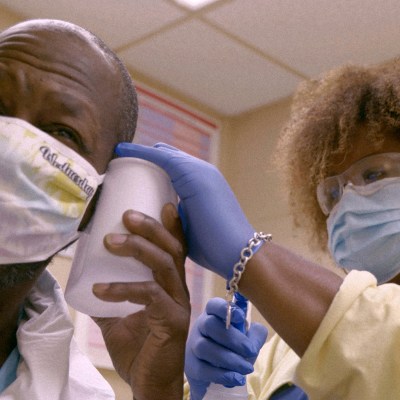 WWW.PROPUBLICA.ORGI Started Covering the COVID-19 Crisis in Albany, Georgia. This Moment Made Me Realize There Was a Bigger Story to Tell.Last week, ProPublica published a five-part series that I wrote with senior research reporter Doris Burke about Albany, Georgia, and its only hospital, Phoebe Putney Memorial. We started working on the story five years ago, when COVID-19 was racing around the globe and Albany small, remote and barely touched by time had the worlds fourth-highest case rate.We initially set out to write a David-vs.-Goliath narrative about the towns response to the crisis. But, as I write in the series, there came a turning point at which we realized there were more enduring questions and challenges facing Albany than COVID-19. They were about race and power.In the weeks immediately following the outbreak, when the pandemic made it too risky for me to travel, I monitored the citys daily press briefings and the hospitals flood of social media posts on Facebook. That, I thought, was where the first draft of Albanys COVID-19 story was being written, and the narrative that was being pushed in them felt disturbingly familiar.Albany is a majority Black city of some 67,000 people. However, while Black residents were dying in disproportionate numbers, the officials leading the response were white: the mayor, the chair of the county government and the senior executives at Phoebe. At every briefing, officials announced the number of people who were sick with COVID-19 and the number of whod died.Then, in early April 2020, for the first time, they announced a name, not a number. The one person who merited personal recognition was Judge Nancy Stephenson. She was white.The chief medical officer at the hospital, Dr. Stephen Kitchen, choked up when he announced her death. Mayor Kermit Bo Dorough took to the podium to ask for a moment of silence to mark the moment, saying it brings many of the people in this community to the next phase of this battle because now we know someone who has been a victim of COVID.The chair of the county government at the time, Christopher Cohilas, proclaimed, We have lost a tremendous jewel of this community. A jewel to the people. Then he added, I think that her passing highlights exactly how lethal this disease can be.Im not going to lie. I cringed at what I was hearing. Some 38 people had died by then. The overwhelming majority were Black. There hadnt been any named mentions or moments of silence at the press briefings for them. How could it be, I thought to myself, that it wasnt until Stephensons death that the citys leaders understood how lethal the disease could be?The comments that came pouring into the live chat of the video briefing made clear I wasnt the only one asking that question.One read, Lets not forget all the others who have passed, and who are known by others in our community.Another read, So you extend condolences to the judge, but not your residents.And then there was this: So now it hits home.That moment resonated with me because two decades earlier Id written a piece as part of a Pulitzer Prize-winning series for The New York Times about how histories written by people in power most of them white tend to erase, minimize and misrepresent the experiences and contributions of those who are not.That story was also set in the South. The series, titled How Race Is Lived in America, was meant to show how the systemic divisions that shape our society and each individuals place in it are driven by day-to-day interactions at work, at school and in hospitals.What I was seeing play out in Albany and at Phoebe felt like the stuff of a new installment. Not only did it seem that city leaders had failed to recognize the magnitude of the crisis until one of their own had died, they had also made those bearing the brunt of the pandemic feel responsible for their own demise. According to the official narrative, the outbreak started at a Black funeral, and the reason Black people were so vulnerable to the virus was because they didnt take care of themselves.Read MoreInside the Free Clinic Caring for Those Who Cant Afford the Only Hospital in TownOn my first visit to Albany, I met Pastor Daniel Simmons, the leader of Mt. Zion Baptist Church. He made clear he was skeptical of the prevailing narrative and encouraged me not to fall for it either.If Albany, Georgia, had done things differently over the years, our community wouldnt have been as vulnerable as it was, he said. If the health care system was different, if it had a different relationship with poor people and people of color, the outcome would have been different.The main lesson that he hoped I and other people would take from Albanys COVID-19 crisis was: It didnt have to be this way.What he and others told me had been left out of that narrative was how hard it had been for African Americans in Albany, particularly those who are poor and uninsured, to get safe and affordable health care in a city whose dominant institution is a hospital. Phoebe Putney Health System is not only the largest provider of health care in southwest Georgia, it is also Albanys largest employer and property owner. The health systems CEO, Scott Steiner, said the hospitals mission is to provide care regardless of race, religion and ability to pay, but were always trying to balance that out with paying the bills.Doris and I spent the following four years exploring that part of Albanys story, interviewing more than 150 sources and poring over thousands of pages of records. We learned that Phoebe was the only hospital in town because it had worked hard even stealthily and spent millions of dollars to drive out its old competitor, before finally managing to acquire it. The cost of care went up and quality went down. Meanwhile the more Phoebe grew, the more economically dependent Albany became, and the harder it was for patients to hold the hospital to account.The CEO that oversaw Phoebe during the period of its most significant growth and the health systems former attorney did not respond to detailed lists of questions. When we asked Phoebes current leaders for responses to our findings, a hospital spokesperson accused us of intentionally excluding positive patient stories. Most patients have positive experiences at Phoebe, he said. Ignoring that fact is wrong.As for Doris and me, we were determined to focus on the people who tend to get left out of Albanys, and the nations, stories because we believed they would resonate with anyone who has struggled to get the health care they need. We hope youll spend time with the whole series. You can read it here. Or you can listen here to an audio version, produced in collaboration with actors from Theater of War.The post I Started Covering the COVID-19 Crisis in Albany, Georgia. This Moment Made Me Realize There Was a Bigger Story to Tell. appeared first on ProPublica.0 Comentários 0 Compartilhamentos 40 Visualizações 0 Anterior
 -
 WWW.PROPUBLICA.ORGHow the FDAs Lax Generic Drug Rules Put Her Life at RiskWrapped in a flashy fur coat shed found at a thrift store for the occasion, Hannah Goetz blew out the candles on her favorite red velvet cheesecake. It was her 21st birthday. The celebration with her family that evening in February 2023 was a milestone not just for her age, but because she was alive.Three and a half years before, her lungs had collapsed from cystic fibrosis. She was saved by a double-lung transplant that had been allowing her to breathe deeply. Hannah had slowly worked her way back to stable health, overcoming infections and, every day, taking a crucial medication to protect her donated lungs from rejection. Her doctors were optimistic.Hannah had been feeling well enough to sing karaoke, work as a nanny while taking college classes and begin her first adult relationship, with a Navy sailor. Her 21st birthday gift from her mom was a trip to Nashville, Tennessee, where the two of them and their friends could explore the citys music scene and cavort in its bars.Just days after her birthday, though, she was back in the hospital. Shed been feeling her chest tighten, and she struggled for air. By March, Hannah felt as if she were breathing through a straw. Tests showed she was taking in less than half the oxygen of a healthy person.One of the first questions came from her transplant teams pharmacist, who had overseen her medications since her operation.Did the tacrolimus pills you take change? he asked.Most people have never heard of tacrolimus. But to anybody who has received a transplant, its nothing short of a miracle. The medication prevents organ rejection. Without tacrolimus, a simple capsule taken twice a day, cells in the blood identify the transplanted organ as a foreign invader and treat it like an infection, trying to rid the body of it. That attack can be fatal.A team of Japanese scientists discovered tacrolimus in the 1980s, in a fungus found in the soil of a lush, purple-hued mountain north of Tokyo.Along with another similar drug, tacrolimus radically improved the long-term prospects of transplant patients. The chances that a donated organ would still work after a year roughly doubled for those who used the drugs. Recipients of kidney, heart and liver transplants started living years longer. So did lung patients, but the challenges of those transplants meant the increases in lifespan were smaller.By the numbers, if Hannah made it past her first year, she could expect her new lungs to give her nine more years of life.Hannah was upbeat during regular two-week hospital stays she dances here during one visit in 2015 which were often needed to treat infections after she was diagnosed with cystic fibrosis. Courtesy of Holly GoetzHannah was in fourth grade in 2012 when doctors figured out that her regular bouts of bronchitis and her struggle to gain weight were caused by cystic fibrosis, a genetic disease that leads to mucus building up in the lungs and other organs. The disease is ultimately fatal.Ten-year-old Hannah sat listening for hours as a medical team explained the diagnosis to her and detailed how it was treated. The doctors managed to avoid any discussion of mortality, and it wasnt until Hannah got home that she found the answer she sought online. At that time, the median lifespan was less than 40 years. Mom, she asked, did you know I wont live as long as most people?Holly Goetz, a high school teacher who was newly divorced and shouldered almost all of her daughters care, tried to reassure Hannah. Her case wasnt severe, she told her daughter. And new advancements could improve the outlook.Hannah didnt dwell on the diagnosis, and she managed to keep up with peers in her Isle of Wight, Virginia, school, playing soccer and singing in musicals. Like any tween, she documented every moment of her life in a series of selfie videos. In one from fourth grade, she chatted to the camera as if she were a jocular TV host, capturing the twice-a-day event when she wore a device that looked like a life preserver and shook her chest to break up the mucus in her lungs. Here I am, vibrating, whooo! she trilled in rhythm with the pink vest. She ended the video, See you next time on Vest Treatment with Hannah.Sometimes, she also needed a feeding tube hooked up to her stomach at night to ensure her body absorbed enough calories. And there were occasional two-week stints at the local childrens hospital for a course of antibiotics.Still, she graduated high school a year early, as a 17-year-old, in June 2019. That month, sporting purple streaks in her hair, shed gone with her family to the Caribbean to celebrate her achievement. She was looking forward to attending Longwood University, a couple of hours west from her hometown.Hannah, whose signature pose was sticking her tongue out, was relatively healthy during her teen years despite having cystic fibrosis at least, until she was 17.One afternoon not long after returning from the trip, Hannah told her mom she was feeling sick. Holly packed up, thinking they were headed to the hospital for a standard tune up.This time, though, Hannah quickly went from sitting up in her hospital bed, mouthing along with the Frozen song Do You Want to Build a Snowman? to a ventilator in the pediatric ICU. She had pneumonia, which was filling her already clogged lungs with even more fluid. Hannah also had an infection from a rare bacteria that had caused sepsis, a type of potentially lethal inflammation. Before Holly could process what was happening, Hannah was in an ambulance, being transferred three hours north to the better equipped Inova Fairfax Medical Campus.The doctors said the prognosis was dire: Hannahs lungs were too damaged to recover, and she needed a double-lung transplant. But the infection was proving insurmountable. Hannah was stuck on the wrong side of an agonizingly thin line: A patient needs to be severely compromised to qualify for a replacement organ; but if theyre too gravely ill, theyre ineligible.The transplant team proposed something bold. The only way to give Hannah a chance, they said, was to remove both of her lungs without knowing whether theyd find new ones for her in the hopes that if they went, so too would the infection. That would clear the way for her to be added to the transplant list.For four days, Hannah lay unconscious in the ICU with no lungs while machines pumped her heart and tubes the size of garden hoses circulated oxygen through her body. Holly curled her lanky frame into a chair by Hannahs bedside every night. She prayed first that the infection would clear and then, later, that a lung donor would be found.The risky move was a success. When Hannah awoke in August, fully conscious for the first time in three weeks, she had no memory of what had happened. Her mom told her everything was going to be OK; she had new lungs.Hannah spent 67 days recuperating in the hospital. At first, she could only take a few tentative steps from her bed with the aid of both a walker and a nurse. She ultimately strode out of the hospital with her arms flung above her head in triumph. Doctors marveled, saying that Hannah had been saved by her youth and surprisingly healthy body.Hannah posed for a picture with her care team, including transplant pharmacist Adam Cochrane, and her mom, Holly Goetz, the day she was discharged from the hospital in 2019 after her transplant. Courtesy of Holly GoetzMedications are so central to recovery from a transplant that the federal government requires hospitals to assign a pharmacy expert as part of a patients team. For Hannah, that person was Adam Cochrane, a specially trained transplant pharmacist with two decades of experience who worked exclusively with lung- and heart-transplant patients.Cochrane, who has a calm, measured disposition, tried not to overwhelm Hannah and her mom as he taught them about the lineup of pills Hannah now needed to take. The daily regime was critical. She cant live without these medications, he told them. Hannah would need to take tacrolimus twice a day at the same time every day for the rest of her life.Tacrolimus is part of a special category of drugs that work only if the dose is calibrated within a very narrow range. Any amount outside that window can be dangerous, particularly for lung transplant patients, who face high rates of rejection. To make sure Hannah was getting the correct dose of tacrolimus, Inova would test her blood every other week to start and then once a month after that. (Inova said that it doesnt comment on individual cases but that it collaborates closely with transplant recipients to ensure they access appropriate medications to maximize the likelihood of a successful outcome.)Theres no formula that tells Cochrane what dosage each patient needs, so he tinkered to find the sweet spot. He thought of it as a teeter-totter. Too much tacrolimus and the immune system would dip too weak to ward off infection. Too little tacrolimus, and the immune system would tip too strong and attack the transplanted organ. Cochrane knew that a steep tip in either direction was potentially catastrophic.For years, tacrolimus was made by one company, now called Astellas, which had discovered and patented the drug. When generic versions arrived 15 years later, none behaved in the body exactly like the original tacrolimus or like one another. To make a generic, most companies have to reverse engineer the brand drug; theres no recipe to follow. Each generic is a distinct formula made in a distinct way.As with all generics, the tacrolimus versions approximated the original within a broad range set by the Food and Drug Administration. In general terms, its how much a generic can differ from the original brand in the amount of the key ingredient that reaches the relevant part of the body and when.As the FDA considered the first generic version of tacrolimus in the mid-2000s, the agency had to decide whether there should be stricter rules for generic versions of the small number of drugs like tacrolimus that require such precision dosing. Canada and the European Union both adopted tighter standards. Those governments essentially halved the range considered to be a match for the brand drug.But the U.S. continued with a one-size-fits all approach, allowing the looser standards that treated tacrolimus like any other generic drug. The agency said in 2009 that it was confident that its method for approving generic tacrolimus uses appropriate bioequivalence standards.The FDA approved the first generic version of tacrolimus that same year. In May 2010, one made by an Indian generics company called Dr. Reddys was approved. The next year, so was one made by another Indian company called Intas, whose U.S. brand is called Accord.In all, six generics were greenlit before the FDA reversed course and decided in 2012 that tacrolimus should, after all, be made under tighter criteria. But the rule applied only to companies newly approved to sell a generic version of tacrolimus. The agency did not require Dr. Reddys, Accord and the others already on the market to meet the new standard. The agency stated later in a public filing that it doesnt retroactively apply new standards to existing products.Almost from the beginning, some transplant doctors had raised concerns that patients on Dr. Reddys tacrolimus were faring worse than those on other generics. The Cleveland Clinic was so alarmed that it banned Dr. Reddys generic for its transplant patients in 2013. Later, at the Tulane Transplant Institute, doctors found that patients taking generic tacrolimus by any drugmaker had a higher chance of organ rejection, and the hospital decided to use only the brand drug.At Inova, Cochrane had noticed irregular fluctuations in patients taking Dr. Reddys as well as early signs of organ rejection. Omg! Another [patient], victim of Dr Reddy, an Inova nurse wrote in a 2019 email obtained by ProPublica.Holly knew none of this when she picked up her daughters tacrolimus at the local Kroger grocery store after Hannahs discharge in the fall of 2019. (Kroger didnt respond to requests for comment.) Unlike with Hannahs medical care, where Holly could research and choose a doctor or hospital, the brand of generic tacrolimus Hannah received was out of her hands. She would get whichever one that pharmacy happened to have in stock.Inovas transplant team had typed, in the electronic prescription that it sent to Kroger, do not dispense Dr. Reddy. But thats what Hannah received.Just months after Hannah was discharged from the hospital with her new lungs, COVID-19 shut down the world. Holly couldnt believe she had to be on guard against yet another threat, one so dangerous to her immunocompromised daughter. Lungs are among the trickiest organs to protect, in part because they draw in germs in the air with every breath.Despite those threats, Holly found a kind of appreciation for the moment. The pandemic meant she could keep 18-year-old Hannah, otherwise eager to leap back into life, tucked away at home during her perilous first year after the transplant. When shed first been discharged, Hannah had shown a streak of teenage rebelliousness. She was quick to drive off in the pumpkin-colored Jeep Holly had given her and get tattoos and piercings, risking infections that transplant patients were supposed to avoid.Holly Goetz in her bedroom this yearHannah lived through the COVID-19 quarantine with her mom and younger brother in their modest clapboard house on a neat suburban street. The three of them, and their newly adopted St. Bernard-poodle mix, Miracle, made dance videos together, and at night, Hannah curled up to sleep in her moms bed rather than head to her own room.That year, Hannahs lung function improved to normal levels as her body grew stronger. When the pandemic began to recede in 2021 and Hannah ventured out more, Holly remained diligent about her daughters tacrolimus, making sure she took it every morning and night. Holly insisted Hannah either send a video of her taking the medication or FaceTime while she did so.Cochrane and the team observed fluctuations in Hannahs tacrolimus levels. Theyd adjust her dosage to try to keep her at the optimal amount. Cochrane concluded that Hannah was perhaps not taking her medication at the same time every day, he told ProPublica. Thats not unusual for young patients. Her adherence to other drugs unrelated to rejection had proved spotty. Hannah wasnt always diligent about taking the enzymes she needed to aid her pancreas and keep her weight up, and she declined to continue a new cystic fibrosis medication that she didnt feel was giving her results.But Cochrane said he didnt think any sloppiness with her tacrolimus meds fully explained the wild swings he often saw when she was admitted to the hospital to treat an infection. His experience with other patients had convinced him that the generic versions of tacrolimus varied significantly, enough to harm the health of a patient.During one inpatient stay at Inova in August 2021, Cochrane gave Hannah the same dose of tacrolimus she took at home. But he used a different generic from the hospitals pharmacy. Cochrane expected to see steady levels of the drug in Hannahs system. Instead, the amount of tacrolimus was much higher than it had been. He said he couldnt remember why he didnt ask Hannah about which brand of generic she was using.During the COVID-19 quarantine, Peyton, Hannahs brother, would make dance videos with her and their mom.Well before Hannah began taking the drug, there had been concerns inside the FDA about whether tacrolimus generics were being made correctly, according to an agency drug official who was there at the time. The manufacturing process for tacrolimus is particularly complex.The medical community had kept pushing the FDA to do more to verify the effectiveness of tacrolimus generics, and in 2013 the agency acquiesced and commissioned a study. That study, which was completed in 2015 and included Dr. Reddys, identified a problem with one generic: the version made by Accord. It didnt mimic the brand drug as it was supposed to.But the agency decided those results were not definitive. The FDA didnt make the findings public, and Accords tacrolimus remained on the market.In 2021, an FDA-commissioned follow-up study showed unequivocally that Accord was not equivalent to the brand drug, potentially delivering too much medication to the patient. But once again, the FDA did not warn the public. Accord continued to be sold as usual.A few months later, in December 2021, Kroger began filling Hannahs prescription with Accords version of tacrolimus.At first, the new generic seemed to have no negative effect. Hannah had fewer bouts of infection than the year before. She was feeling the best she had since the operation, faring well enough that Holly thought it was OK to leave her for the first time and go on a cruise.That year, in July 2022, Hannah marked her three-year transplant anniversary on Instagram with a close-up picture of her bad ass scars. They were a sort of tattoo she hadnt chosen, but, as she wrote, they will always remind me that I got a second chance.Both Hannah and her mom were taken by surprise when Hannahs breaths became shallow around the time of her 21st birthday in 2023.i wish i was out and about with friends and family enjoying the weather but unfortunately my reality has been me cooped up in a hospital room, she posted to Instagram in March. I put on a brave face for all my loved ones, but deep down it affects me everyday.Hannah celebrated her lungiversary one year by taking the roof and doors off her orange Jeep and convincing her cousin to get matching Saturn and moon tattoos. Courtesy of Holly GoetzThe next month, tests confirmed that Hannahs lung function had declined precipitously. If shed been breathing through a soda straw before, now it was closer to the thin red ones used to stir coffee.Cochrane asked what brand of tacrolimus she was taking. He always had to sleuth a bit to figure out what might be going on; perhaps a patient had chronic digestive problems or their diet had changed, affecting the absorption of tacrolimus. He was most concerned that a patient had been on Dr. Reddys. Cochrane was not suspicious of Accord at the time; the FDA hadnt made its study results public.Holly went home after the conversation with Cochrane and scoured her medicine cabinets. It was the first time shed ever had a reason to look at the manufacturer. Cochrane had trusted pharmacies to follow Inovas instructions, and so he hadnt previously warned Holly to avoid Dr. Reddys. Sure enough, Hannah had old bottles labeled Dr. Reddys. Cochrane told Holly to throw them away.For more than three years, Hannah had exclusively taken tacrolimus manufactured by companies that had alarmed either doctors, pharmacists or the FDA. Cochrane would later wonder if there had been a cumulative effect chronic rejection is sneaky and slow and Hannah had now reached a tipping point. Her donated lungs were failing.Hannahs mood darkened as her decline accelerated. In April 2023, back at her local hospital yet again, she snapped at the nurses. Everyone was always telling her how strong she was, she fumed. She wanted out of that room. When she counted the days shed been home rather than hospitalized since late January, she realized it had been only 20.I dont want to do this again, Hannah told her longtime respiratory therapist.Anxiety gripped her at all hours. She couldnt breathe.That month, a biopsy had confirmed that her body was rejecting her lungs, precisely what tacrolimus was supposed to prevent. The damage was irreversible.Once again, theyve decided i need new lungs, Hannah wrote on Instagram. Its happening a lot sooner than anyone expected.Hannah checked into Inova in June with the expectation that she would have a second lung transplant. But as she got increasingly sick, she spent the next five weeks being moved between the transplant wing and the ICU two floors below. Holly was vigilant by her side. When Hannah lashed out because there was a tear in her pink security blanket, the one shed had every time she was hospitalized since she was 10, Holly paid someone double to patch it in one hour. She followed doctors into the hallway after they checked on Hannah. Her daughter had done everything theyd asked of her. When was she getting new lungs?Doctors wanted Hannah to be able to stand up and walk, a sign she was strong enough to survive a second transplant. Holly encouraged Hannah to push through the discomfort, thinking to herself, Youve got to show them you want to live. Hannah lacked the energy to even speak most days. She agreed when the transplant team proposed a tracheostomy, a surgical procedure to place a tube into her windpipe to help her breathe. That way, she could have the benefit of a portable ventilator and still do the required physical therapy. On a sheet of printer paper, she wrote in shaky letters that she needed the vent.hurryhurryAt 3 in the afternoon after Hannah received the tracheostomy, the transplant team called a meeting with Hannahs family. Standing in a conference room in clothes shed worn for days, Holly listened in shock as doctors explained that Inova would no longer consider Hannah for a transplant. Hannah was underweight, she had poor kidney function that would likely require dialysis and she had a persistent sinus infection. Hannah was simply too fragile.How could you deny someone so young? Holly asked again and again. What about the medication, the Dr. Reddys? No one had told her to look out for that until Hannah was already in rejection. Didnt they owe her another chance?Over the next few days, while Hannah was sedated, Inova searched for other transplant programs. Temple University Hospital in Philadelphia was the only facility willing to evaluate her. Shed have to start over with a new transplant team.Whos going to tell Hannah? Holly asked. It wasnt going to be her.Hannah lacked the energy to speak most days, so she would communicate by writing on printer paper. She asked for a ventilator to help her breathe.Hannah lay in the intensive care unit with her blond hair slicked back off her face, puffy from the side effects of aggressive medications. She was gently roused from sedation. Several transplant doctors hovered at her bedside. Hannah looked with confusion at her mom and grasped her hand.Christopher King, Hannahs favorite among her transplant doctors, tried to help her understand what was happening. Youve been a little bit in the dark for the last day or so. Youve been sedated, King said. Things have changed a little bit over that time.He told her he wasnt sure shed survive a second transplant. He didnt want to put her through more suffering if, in the end, it wouldnt help. We dont think we should offer you a transplant here, he said.Hannah, unable to speak because of the tracheostomy tube, reached her pale hand for a marker and wrote on a small dry erase board: I dont wanna die. Im only 21.King told her she could go to Temple, but she would need to be off the ventilator during the day and be able to walk a lap around the ICU to be eligible for a transplant. Even if she could do that, a transplant was not guaranteed.Do you want me to give you some time? King asked.Holly watched her daughter fade back into sedation, and she knew: Hannah was done fighting. Holly had begged the surgeon to do everything to keep Hannah alive. She had begged the director of the transplant program. She had begged other hospitals. She would not beg her daughter.Im sorry, Hannah wrote after waking a short time later. She didnt want to try for a second transplant. She was ready to let go.Hannah took her brothers hand and made him promise he wouldnt forget her. She FaceTimed with friends, mouthing that she loved them. She pushed to stay awake for goodbyes with her father, grandparents and other family.As nighttime fell, Holly sat by Hannahs side, in the glow of two lava lamps. Holly told her how proud she was and that she understood that she couldnt do it any more. Youve made me so happy, she said. Holly was sorry she hadnt done something more to save her.Hannah was gasping for air. She needed more Dilaudid, an opioid that is about five times stronger than morphine.Holly knew it was time. She walked out into the harsh light of the nurses station and requested the drugs that would slip her daughter into unconsciousness for good. Is this really happening? she thought to herself. Did I just talk to her for the last time?At 10:48 p.m., the doctors removed Hannahs ventilator.Holly found a note in Hannahs phone: dear mom, i think eventually you will find this, and when you do i dont want you to get sad. She assured her mom shed had a great life, and you truly are my best friend.i fought so hard and this time luck just wasnt on my side.Holly and Peyton, who is now 19When Hannah died at 8:19 in the morning on July 16, 2023, eight years had gone by since the FDAs first study raised questions about Accord. Two years had passed since the FDA had definitive results that Accord didnt match the brand-name medication.Two months after her death, in September 2023, the FDA finally took public action. The agency announced that Accords tacrolimus doesnt provide the same therapeutic effect as the original brand-name medication. That step would stop many prescriptions, since some states bar pharmacists from automatically dispensing a generic flagged in that manner. Still, in the very next sentence, the FDA added, the pills remain FDA-approved and can be prescribed. The agency told ProPublica that it needed two years to review and release the study results in order to evaluate the potential public health impact and determine what to do about the drug. (The FDA answered questions about its handling of tacrolimus generics but didnt respond to questions about Hannahs specific case.)The problem, the agency stated, was that Accords drug could provide a toxic dose to a patient. But the FDA said that did not cause an increased risk for organ rejection, because the amount of drug in the body when measured at its lowest concentration was not significantly different than the brand drug.The FDA should have moved quicker, Janet Woodcock, the longtime head of drug safety for the agency, told ProPublica. This obviously is a quality problem with Accord, Woodcock, who retired in 2024, said. Scientists had gotten caught up in debate about how significant the results were, she said. That doesnt excuse the fact that the agency should immediately jump on these things and try to sort them out, she said, adding that tacrolimus for transplant patients is crucial to health and should be right.An Accord spokesperson said in a statement that the company can not comment on individual cases but that it is dedicated to patient safety, product quality and regulatory compliance. Accord maintains that its tacrolimus is safe and effective. The FDA recommended in 2023 that the company do new studies to prove its bioequivalence, but shortly after, the FDA banned two of Accords factories in India from selling drugs in the United States, citing a cascade of failure in the companys manufacturing. The work on tacrolimus is on hold while the import ban remains in place.ProPublica hired Valisure, an independent lab, to test both Accords and Dr. Reddys tacrolimus. Valisure used peer-reviewed methods designed to compare the quality of generics, a method adopted by the Department of Defense. The tests concluded that Accord dissolved too quickly, raising the possibility of too much active ingredient at the outset and then too little after the surge. In tests that focused on dosage, three out of seven sample batches didnt provide enough of the medication, including pills that were supposed to be 0.5 milligram, 1 milligram and 5 milligram doses.Dr. Reddys tacrolimus, which is still sold in the U.S., also fared poorly. The lab found that it dissolved up to twice as fast as the brand-name drug. A 2021 study by Cleveland Clinic doctors found similar results.A Dr. Reddys spokesperson said in a statement that the companys version of tacrolimus was approved based on rigorous studies; the statement added that all batches sold in the United States have met FDA specifications and FDA studies didnt reveal any problems with its tacrolimus. The company said the independent lab did not use the FDA-approved testing method, so the results cannot be considered an accurate representation of Dr. Reddys dissolution performance. Dr. Reddys did not receive a complaint about Hannahs case nor any other complaints that indicated any concerns in patient safety, according to the statement. Patient safety and consistent product performance remain our highest priorities.Hospitals like Inova and the Cleveland Clinic today advise patients not to take Dr. Reddys and Accords tacrolimus. Cochrane had another lung transplant patient die this year after experiencing rejection that he ties to Dr. Reddys tacrolimus. Like Hannah, the patient received that brand despite Inovas instructions on the prescription, and its impossible to say with certainty what caused the organ rejection. Since 2019, Cochrane has reported to the FDA database that tracks adverse events related to drugs four episodes in which he suspected that Dr. Reddys tacrolimus contributed to organ failure or the death of a patient.Cochrane understands that patients could use brand-name tacrolimus and still suffer organ rejection. And no one knows what exactly caused it in Hannahs case.But Cochrane told ProPublica, I believe her medicine contributed to her rejection.Holly wants to hold someone accountable, but its extremely difficult to sue the FDA and lawyers told her it was impossible to draw a straight line from Hannahs death to a generic manufacturer.Holly is tortured by the question of whether Hannah would still be alive if she had been on a different brand of tacrolimus: I just wish I had known.These days, with Hannahs younger brother at college, Hollys house feels too quiet. Each night, she falls asleep holding Hannahs worn pink blanket.Hannahs bedroomThe post How the FDAs Lax Generic Drug Rules Put Her Life at Risk appeared first on ProPublica.0 Comentários 0 Compartilhamentos 48 Visualizações 0 Anterior
 -
 WWW.PROPUBLICA.ORGMonkey Sounds, White Power and the N-Word: Racial Harassment Against Black Students Ignored Under TrumpIn Colorado, students taunted their Black classmates by playing whipping sounds on their cellphones and saying they should be shot to make us a better race.The only two Black students in a small district in Ohio were called the N-word by white peers starting on their first day. They got accustomed to hearing slurs like porch monkey and being told to go pick cotton.And at a school in Illinois, white students included Confederate flags in their PowerPoint presentations for class assignments and shook a school bus as Black students were exiting to try to make them tumble off.In each case, the U.S. Department of Educations civil rights arm investigated and concluded that school districts didnt do enough to stop racial hostility toward Black students. It struck agreements with those districts to require changes and to monitor them for months, if not years. They were among roughly 50 racial harassment cases the OCR resolved in the last three years.But that sort of accountability has ended under the second administration of President Donald Trump. Nearly a year since he took office, the departments Office for Civil Rights has not entered into a single new resolution agreement involving racial harassment of students, a ProPublica analysis found.The message that it sends is that the people impacted by racial discrimination and harassment dont matter, said Paige Duggins-Clay, an attorney with a Texas nonprofit that has worked with families whove filed racial harassment complaints with OCR.The Education Department had been investigating nine complaints in the Lubbock-Cooper school district tied to racial discrimination, but Duggins-Clay said she and others involved in the cases havent heard from the department this year.The OCR regularly resolves dozens of racial harassment cases a year and did so even during Trumps first administration. In the last days of the Biden administration, OCR workers pushed to close out several racial harassment agreements, including one that was signed by the district the day after Trump was inaugurated. With Trump in office, the agency has shifted to resolving cases involving allegations of discrimination against white students.At the same time, the administration has been clear about its goal of dismantling diversity, equity and inclusion programs across all facets of American life. This has been especially pronounced at schools and colleges, where the administration has also eroded protections for transgender students and considerations for historically disadvantaged groups.Internal department data obtained by ProPublica shows that more than 1,000 racial harassment investigations initiated in previous administrations still are open. Most of those complaints involve harassment of Black students.Not only has the Education Department failed to enter into any resolution agreements in those racial harassment cases, but it also has not initiated investigations of most new complaints. Since Jan. 20, it has opened only 14 investigations into allegations of racial harassment of Black students. In that same time period, more than 500 racial harassment complaints have been received, the internal data shows.The Education Department did not respond to ProPublicas questions and requests for comment. Trump is working to shutter the Education Department, and the agency has not updated online case information typically accessible to the public since he took office.Under Trump, OCR even stopped monitoring many districts the agency previously found had violated students civil rights including some that the OCR rebuked days before Trump took office. In most cases, districts had agreed to be monitored.On Jan. 13, the OCR closed out a nearly three-year investigation into the Cottonwood-Oak Creek Elementary District in Arizona, which it found had made minimal and ineffective attempts to address racial and sexual harassment at the school.A seventh grader who describes herself as Afro-Indigenous said school employees witnessed her being pushed, kicked and ridiculed for having darker skin, then having water poured over her head by a boy to baptize her for the sin of being gay, using a slur. But the school, according to records, merely documented the incidents and then removed the boy from music class for the last weeks of the school year.Students in Cottonwood who identified as queer told an OCR investigator that they were having anxiety attacks and considering harming themselves after sustained harassment. Peers groped their bottoms and nipples and yelled, Thats the homo way! A teacher told OCR she heard a kindergartener use the N-word and saw swastikas doodled on notebooks, and students admitted saying slavery is good and white power. For many, the investigator found, school was a hostile, discriminatory place.Kate Sierras filed a complaint against Cottonwood-Oak Creek Elementary District with the Office for Civil Rights on behalf of her daughter. Jesse Rieser for ProPublicaAlmost immediately my daughters whole personality changed. She just went from a vibrant, happy, confident person to a person with dark circles under her eyes, said Kate Sierras, who filed a complaint with the OCR on behalf of her daughter, the girl who was baptized.Her daughter was heartbroken, she said.She started having panic attacks every day. It got to the point where I would drive her to school and she wouldnt get out of the car.The district agreed to extensive training for staff, training for students and their parents, and a thorough audit of reported harassment for two school years. A district spokesperson said the district has tried to address OCRs findings but that it never heard from OCR again after the agreement was reached.Were prepared and ready to move forward as soon as they reach out, the spokesperson said.A Diminished Dismissal FactoryThe OCR operates under a 1979 congressional mandate to ensure equal treatment at school for students regardless of race, gender or disability. As recently as last year, it remained one of the federal governments largest enforcers of antidiscrimination laws, with nearly 600 civil rights workers.It has weathered the prerogatives of each presidency. In Trumps first term, the OCR took a less aggressive stance than in previous years. But as he entered office a second time, Trump was not ready to settle for incremental change. He pledged to carry out the long-held conservative dream of shutting down the Education Department. His education secretary, Linda McMahon, has decimated the OCR and shifted its purpose.The Trump administration started the process of laying off hundreds of Education Department workers in March about 300 of them from the OCR and closed seven of the 12 regional civil rights offices. While court challenges played out, those workers have been on paid leave.Amid the staffing chaos and the shift in priorities at the OCR, families discrimination complaints have piled up. When President Joe Biden left office, there were about 12,000 open investigations; now there are nearly 24,000. The majority involve students with disabilities, as has been the case historically.At the same time, even getting complaints into the investigative queue is getting harder. Attorneys still on the job at OCR describe working in what they call a dismissal factory. Records filed in court cases show that most complaints filed by families have been dismissed without investigation.Real investigations are very infrequent now, said Jason Langberg, who was an OCR attorney in Denver until this summer. With more than half the workforce gone, pauses for various reasons, a shutdown this is what you get.This month, the OCR ordered employees affected by the disputed layoffs back to work. In an email to those staff members on leave, the department said it still planned to fire them but now wants them to start working through its backlog.Protesters rally outside the U.S. Department of Education building in Washington, D.C., as the Trump administration made cuts to the agency in March. Around 300 employees were cut from the OCR alone. Jason Andrew for ProPublicaThe accumulation of cases that stalled mid-investigation include several in West Texas. One stems from allegations that white students accosted Black students with racial slurs and monkey sounds in the hallways at a middle school in the Lubbock-Cooper school district in 2022. Those complaints were being handled by the OCRs Dallas office, which McMahon closed. No information has been provided about the cases since, according to a March court filing in one of the lawsuits to stop OCR layoffs.Duggins-Clay, an attorney with the nonprofit Intercultural Development Research Association who has advocated for Lubbock-Cooper families, said the OCR had interviewed students and parents and was actively investigating their concerns through last year.We felt like OCR was close to making a determination. We thought we were going to be able to get a resolution in the next couple of months, early in 2025, Duggins-Clay said.She emailed the investigator in July and got an automated reply that the employee no longer had access to the email. There has been no outreach, no communication, nothing. Period, she said.District officials said in a statement that they also havent heard from the OCR this year. The board of trustees passed a resolution in 2023 condemning racial harassment, and the district remains committed to fostering a strong, welcoming climate for students and the community, and addressing concerns promptly and thoroughly whenever they arise, the statement said.The OCR did reach out in July to Jefferson County Public Schools in Louisville, Kentucky to sanction it for its efforts to address discrimination against Black students. In September 2024, under the Biden administration, the district had agreed to address OCRs finding that it disproportionately disciplined Black students and to put in place measures to halt unfair treatment.Trumps Education Department, however, warned the district that it will not tolerate efforts to consider racial disparities in discipline practices and accused the district of making students less safe. Then it revoked a nearly $10 million federal magnet-school grant and chastised the district for having sent extra funding to schools with more students of color.The district revised its school funding formula in response but has asked an administrative law judge within the Education Department to reinstate the grant, which is designed to help further school desegregation nationwide and ensure all students have access to a high-quality education.The OCRs work has slowed, but racial harassment of Black students at school hasnt, said Talbert W. Swan II, president of the Greater Springfield NAACP in Massachusetts. Only last year in his community, white students in the Southwick-Tolland-Granville Regional School District held a mock slave auction on Snapchat, bidding for the sale of Black students.The district agreed to address racial bullying and to be monitored by the state attorney general through this school year.When youre talking about 13-year-olds holding a slave auction, it lets you know that these racist attitudes are not dying, said Swan, who also is senior pastor of the Spring Of Hope Church Of God In Christ. Theyre being reproduced over and over again from generation to generation.Civil Rights Enforcement AbandonedIn North Carolina, one district sees Trumps view on civil rights enforcement as a way out of a resolution agreement reached at the end of the Biden administration.An OCR investigation at mostly white Carteret County Public Schools had found that students had hurled racial slurs at two Black teenagers who had enrolled mid-year. Classmates cornered one of the boys in a bathroom stall and taunted him about his darker skin.The boys family pleaded with school officials to intervene. In response to these incidents, administrators offered access to a staff-only restroom; the schools police officer suggested that one of the boys leave school 10 minutes early, and the principal permitted the other to skip class. Administrators viewed the harassment at Croatan High School as isolated incidents because there were many different perpetrators, records show.William Hart II, whose son and nephew were the targets of harassment, said it was so unbearable and the districts reaction so inadequate that he and his wife moved the family to Florida after just four months in Carteret County. Both students graduated, and Harts nephew joined the U.S. Air Force. Both remain in therapy trying to make sense of the traumatic time.I never wouldve thought my boys would go through this. I thought my generation would be the last to deal with it. My father went to a segregated school growing up in North Carolina, Hart said. We thought it would be different.On Jan. 16, investigators struck an agreement with the Carteret County district. But in February, the district urged OCR to nullify its findings and the deal given the dramatic changes underway in Washington, D.C., according to emails from the district to the OCR that were obtained by ProPublica.The agreement was based on the previous administrations notion of diversity, equity and inclusion, wrote Neil Whitford, the attorney for the district.The election of Trump as President has made it crystal clear that DEI at the federal level is dead, he wrote.Whitford told ProPublica in an email that the district has an excellent reputation and prides itself on having strong antidiscrimination policies. The district, he said, handled the racial harassment of the two boys well and has completed some terms of the resolution agreement even though it maintains it broke no civil rights laws.Records show that no one from the OCR has responded to the Carteret County district since February, including to its request to dismiss the agreement and postpone any remaining reform efforts.Help Us Report on How the Department of Education Is Handling Civil Rights CasesHave you recently filed a civil rights complaint or do you have a pending case? We need your help to get a full picture of how the dismantling of the Office for Civil Rights is affecting students, parents, school employees and their communities.Share Your ExperienceThe post Monkey Sounds, White Power and the N-Word: Racial Harassment Against Black Students Ignored Under Trump appeared first on ProPublica.0 Comentários 0 Compartilhamentos 48 Visualizações 0 Anterior
 -
 WWW.PROPUBLICA.ORGInside the Free Clinic Caring for Those Who Cant Afford the Only Hospital in TownThe Samaritan Clinic is a small, free clinic serving people without health insurance in Albany, Georgia. It was created in 2008 to provide care for people who couldnt afford medical treatment. More than 15 years later, the need has changed little. Today, Albany has one of the highest poverty rates in the state. About 16% of residents are uninsured, nearly double the national average. And people here pay some of the highest commercial health insurance rates in the country.Not far from the Samaritan Clinic is Phoebe Putney Memorial Hospital, Southwest Georgias largest hospital a nonprofit founded on the principle that patients should be treated regardless of their ability to pay.So why do some residents turn to a free clinic for care?This short documentary is part of Sick in a Hospital Town, a five-part series about why people in Albany are so sick when the main institution is a hospital. You can read and listen to it.Watch the video here.The post Inside the Free Clinic Caring for Those Who Cant Afford the Only Hospital in Town appeared first on ProPublica.0 Comentários 0 Compartilhamentos 50 Visualizações 0 Anterior
 -
 WWW.PROPUBLICA.ORGRx Inspector: ProPublicas New Tool Provides Drug Info the FDA WontWith every bottle of prescription medication comes an implied promise: The drugs are safe and effective and meet strict standards set by the Food and Drug Administration.But the agency known as one of the worlds toughest regulators provides only intermittent oversight of the foreign factories where generic drugs are made. And when investigators turn up mold, filthy equipment and contaminants in those facilities, the FDA keeps the names of the drugs they make secret.Consumers often have no way of knowing if the medications they are taking came from factories that used dirty water, were infested by insects or birds, or were outright banned from shipping drugs to the U.S., but then granted special exemptions to do so anyway.Today, ProPublica is launching Rx Inspector, a first-of-its-kind database that provides answers to what the FDA wont tell us: where our generics are coming from and the track records of the factories that made them. The information is harder to find than you may think.Labels on pill bottles often list a distributor or repackager rather than the actual manufacturer and some have no information at all. When ProPublica asked our readers to send in photos of their pill bottles, they flooded our inbox with pictures proving just how difficult that information is to come by.Even though generic drugs make up 90% of prescriptions dispensed in the U.S., the FDA only provides piecemeal information about them. Its scattered across different websites with no easy way to link drugs to their manufacturers, factory locations and regulatory track records. Over many months, our journalists connected that data. In one case, ProPublica had to sue the FDA in federal court and received a partial list of factory locations.You can use this app to connect your own medication to the manufacturer that made it, to the specific factory where it was made and to any FDA inspection reports and serious compliance violations linked to that facility that ProPublica has obtained.For example, you can enter your drug name and any information on the label of your pill bottle about the company that may have made it. If you dont have a company name, you can enter the color of your pills, or any markings on them, details that can lead you to information for your specific drug. From there, you can learn the name of the actual manufacturer (not the company that simply repackaged or distributed it). And you can also see the address for the factory that produced it.If the factory has been inspected by the FDA, well show you the inspection reports and any subsequent warning letters. We didnt have access to every inspection report, so you may only see summary information that includes the dates of the inspections and any findings.For pharmacists and others particularly knowledgeable about drugs, weve added an advanced search option so that you can enter key information, such as the National Drug Code, and quickly pull up manufacturing and regulatory details.Finally, this app will allow you to learn more about individual drugmakers overall by providing a way to search for their factories. By entering a company name, you can see when those factories were last inspected and whether the FDA took any action in recent years.Keep in mind that if you turn up a troubling inspection report, it doesnt necessarily mean that your drug is compromised. Doctors and pharmacists advise that you not stop taking your medications. Instead, you should talk to your health care provider about any concerns.ProPublica described the app and the methodology used to build it to the FDA, which did not comment. The agency previously told ProPublica that it doesnt reveal where drugs are made on inspection reports to protect what it deemed confidential commercial information.Our data is incomplete in places. The FDA, for example, hasnt released all of its inspection reports. And though the agency provided ProPublica with a list of medications and the factories that made them, some locations were missing. Well add more details as they become available.But this app provides the most detailed look yet at the makers of Americas generic drugs and whether theyve met manufacturing standards meant to keep us safe.The post Rx Inspector: ProPublicas New Tool Provides Drug Info the FDA Wont appeared first on ProPublica.0 Comentários 0 Compartilhamentos 52 Visualizações 0 Anterior
Mais Stories